For most Australian laundries, hybrid flooring or vinyl planks are the practical answer: built with waterproof cores, easy to clean and comfortable to stand at. Tiles remain the right call where the laundry is built as a true wet area with a floor waste. The one floor to be careful with is laminate, whose timber-based core does not forgive standing water.
The laundry works harder than its size suggests. Washing machine cycles, wet washing, muddy shoes, pet towels and the occasional hose or leak all land on this one floor. Choosing well here is less about looks and more about what the floor can shrug off, though the good news is that today’s waterproof floors look genuinely good doing it. If you are weighing up flooring across the whole house, our room-by-room flooring guide covers every space.
What Laundry Flooring Has To Handle
- Moisture – splashes, condensation, wet baskets and the occasional appliance leak.
- Traffic with a payload – full baskets, muddy shoes and pets coming in the back door.
- Cleaning chemicals – detergents and bleach splashes that stain or dull delicate surfaces.
- Appliance weight and vibration – a loaded washing machine is heavy and it moves.
One important note before choosing: where a laundry contains a floor waste or is designed as a wet area, waterproofing requirements drive the flooring choice and tiles are usually the answer. This guide assumes a typical residential laundry where the floor is not regularly holding water.
Hybrid Flooring In The Laundry
Hybrid’s waterproof core is built for exactly this room. Spills and splashes sit on the surface until they are wiped, the rigid core stays flat under a loaded machine, and the same floor can run from the kitchen through the laundry without a transition strip. Cleaning is a sweep and a damp mop. If you are running hybrid flooring through the living areas, continuing it into the laundry is the tidy solution.
Vinyl Planks In The Laundry
Vinyl planks bring the same waterproof confidence with a slightly softer, quieter feel underfoot, which is welcome in a room where you stand and fold. Glue-down vinyl also handles appliance vibration well because every plank is bonded to the subfloor. For laundries that double as mudrooms, vinyl’s seamless cleanability earns its keep daily.
Why Waterproof Planks Beat Tiles In The Laundry
Tiles have history in laundries, and where a floor waste makes the room a true wet area they remain the compliant answer. For every other laundry, waterproof planks now win the comparison on the things you feel every day:
- Warmth and comfort – planks are warmer and softer to stand at through a folding session than hard, cold tile.
- No grout lines – nothing to scrub, seal or watch discolour; the surface wipes clean in one pass.
- Kinder to dropped items – and quieter under a spinning machine.
- Faster, simpler installation – floating planks go down quickly, often over the existing floor, without wet trades.
- One continuous look – the same floor flows in from the kitchen and hallway, making a small laundry feel like part of the home rather than a utility corner. Stone-look planks even deliver the tile aesthetic with none of the chill.
Laminate In The Laundry
Laminate earns a caution rather than a recommendation here. Its surface is tough, but its core is timber-based, and water that finds an edge or join can swell it permanently. Plenty of laundries have laminate and survive on good habits, wiping spills immediately and checking hoses, but choosing it new for a laundry means accepting that discipline. Our hybrid vs laminate comparison explains the construction difference behind that advice.
Laundry Floor Ideas That Work
- Continue the kitchen floor – running the same hybrid or vinyl through kitchen, hallway and laundry makes a small room feel like part of the whole.
- Lighter tones – laundries are usually small and often windowless; lighter timber-look planks keep them feeling open.
- Matt, textured surfaces – they hide lint, footprints and detergent splash marks between cleans.
- Stone-look planks – a tile aesthetic with plank comfort, for homes that like the utility-room look without the cold feet.
Frequently Asked Questions
- Can you put hybrid flooring in a laundry? – yes, it is one of the rooms hybrid suits most. The waterproof core handles splashes and appliance leaks, provided the laundry is not a designed wet area with a floor waste, where tiles and waterproofing rules apply.
- Is laminate flooring OK in a laundry room? – it is workable but not ideal. The timber-based core swells if water sits in the joins, so it demands prompt spill habits. Waterproof hybrid or vinyl removes the worry.
- What is the best flooring for a utility room? – the same logic as laundries: waterproof planks for standard rooms, tiles where the space is a wet area. Durability and easy cleaning outrank looks in hard-working utility spaces.
- Do I need waterproof flooring if my laundry has a floor waste? – a floor waste signals the room is designed as a wet area, and building requirements around waterproofing and falls typically point to tiles. Check with your builder or certifier before choosing planks.
- Should I put carpet in a laundry? – no. Moisture, detergent and lint make it the wrong room for carpet, which belongs in the bedrooms and living spaces it serves so well.
Comparing Laundry Floors At Home
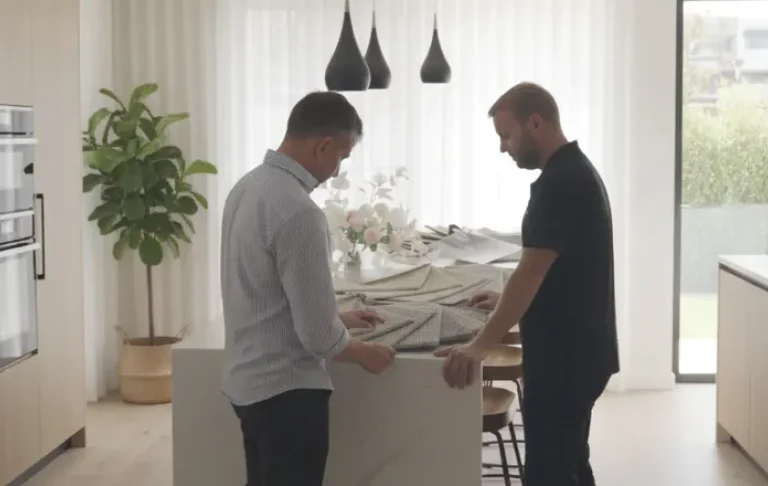
Small rooms punish guesswork, because a single dark or busy choice can shrink them further. Our mobile showroom brings our hybrid and vinyl plank ranges to your door, so you can lay samples next to the machine and cabinetry, see the colours under your laundry’s actual lighting, and get straight advice on what handles your household’s washing day, with a professional measure in the same visit. Book a free in-home measure and quote when you are ready.