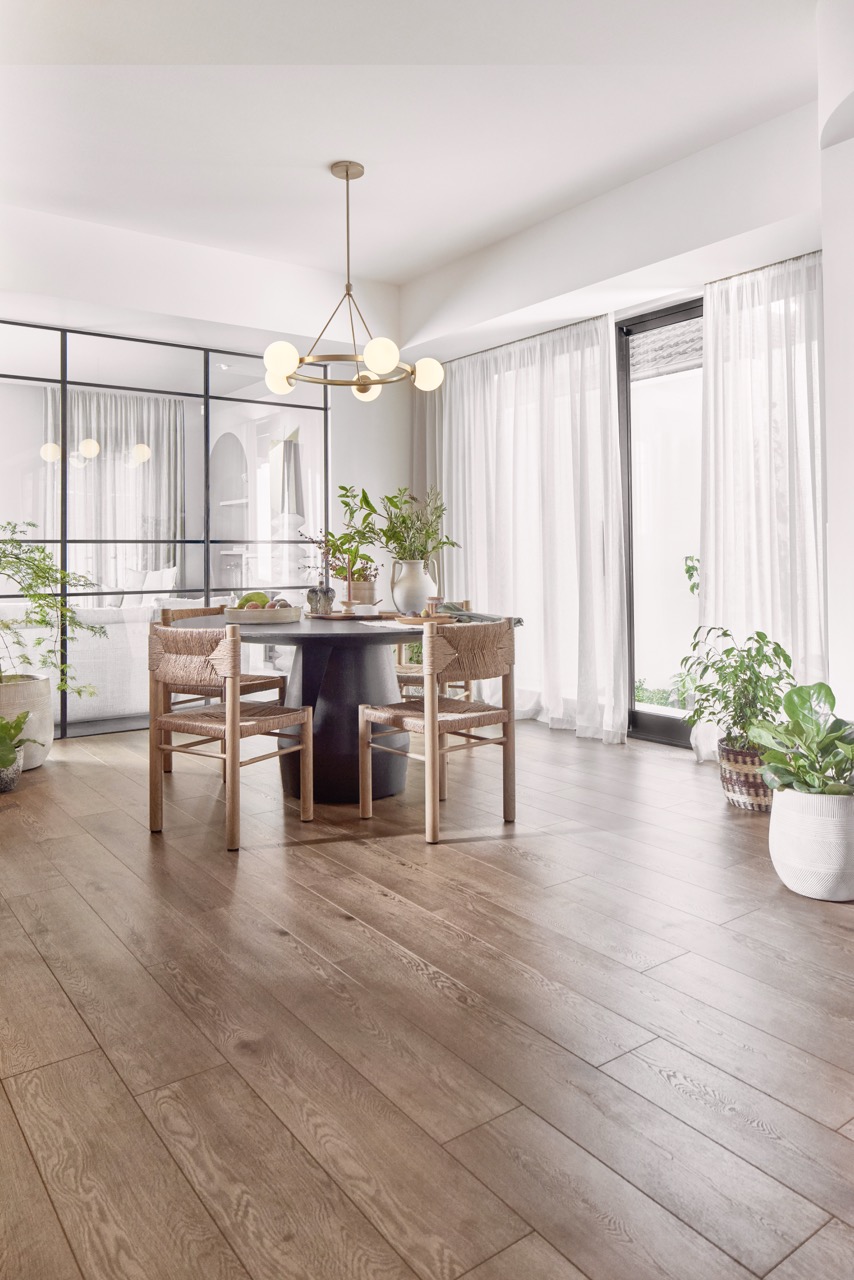
Hybrid and laminate are two of the most popular timber-look floors in Australia, and choosing between them trips up plenty of homeowners. They look similar in photos, they both click together as floating floors, and they often sit near each other on price. Underneath, they are built around completely different cores, and that one difference decides where each floor belongs in your home.
This guide explains how each floor is made, the differences you will actually notice day to day, the honest trade-offs of both, and a simple way to decide which one fits your rooms, your family and your budget.
Quick Comparison: Hybrid vs Laminate
| Feature | Hybrid Flooring | Laminate Flooring |
|---|---|---|
| Core | Rigid stone-plastic composite (SPC) | Dense timber fibreboard (HDF) |
| Water performance | Water-resistant to waterproof by range | Handles humidity, not standing water |
| Feel underfoot | Solid and quiet, often with attached underlay | Firm with a crisp, timber-like sound |
| Surface realism | Very good, printed layer | Excellent, deep embossed textures |
| Rooms it suits | Whole home, including kitchens and laundries | Living areas, bedrooms, hallways |
| Typical price position | Mid-range | Entry to mid-range |
| Installation | Floating, click-together | Floating, click-together |
What Is Hybrid Flooring?
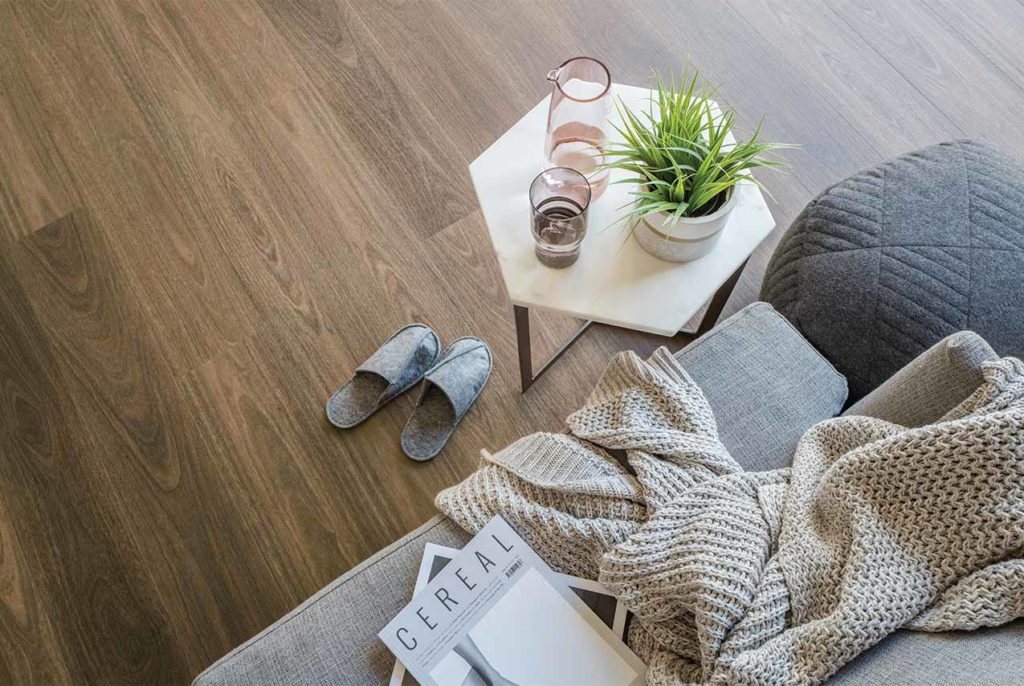
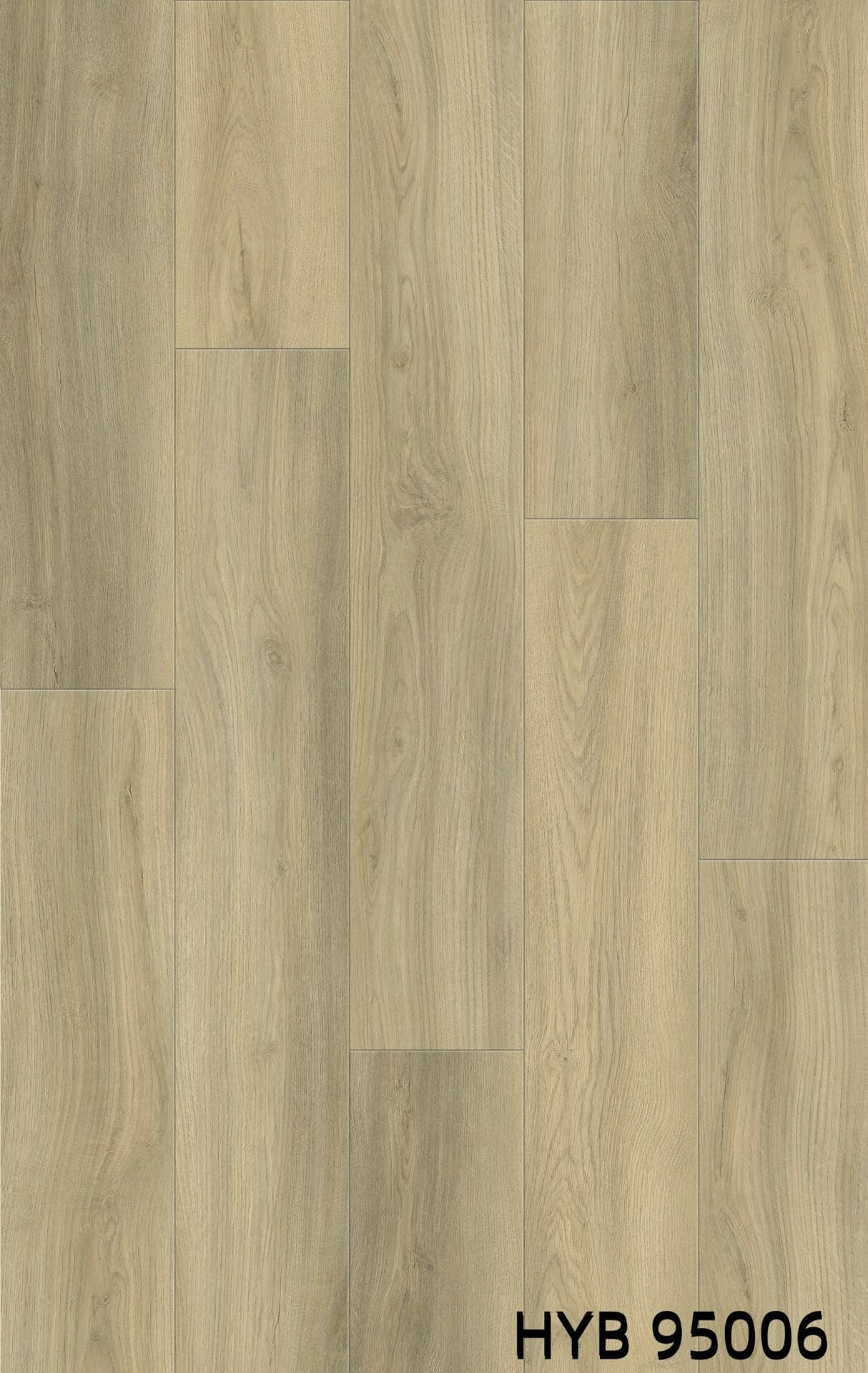
Hybrid flooring takes its name from combining the toughness of laminate with the water performance of vinyl in a single plank. Each board is built around a rigid core, most commonly SPC (stone plastic composite), with a printed timber-look layer above it, a clear wear layer on top and, in many ranges, an acoustic underlay already attached underneath.
That rigid core is what makes hybrid so stable. It barely moves with temperature swings, handles moisture far better than any timber-based product, and clicks together as a floating floor that can often be installed straight over existing hard floors. Our SPC flooring guide looks at the core technology in more detail.
What Is Laminate Flooring?
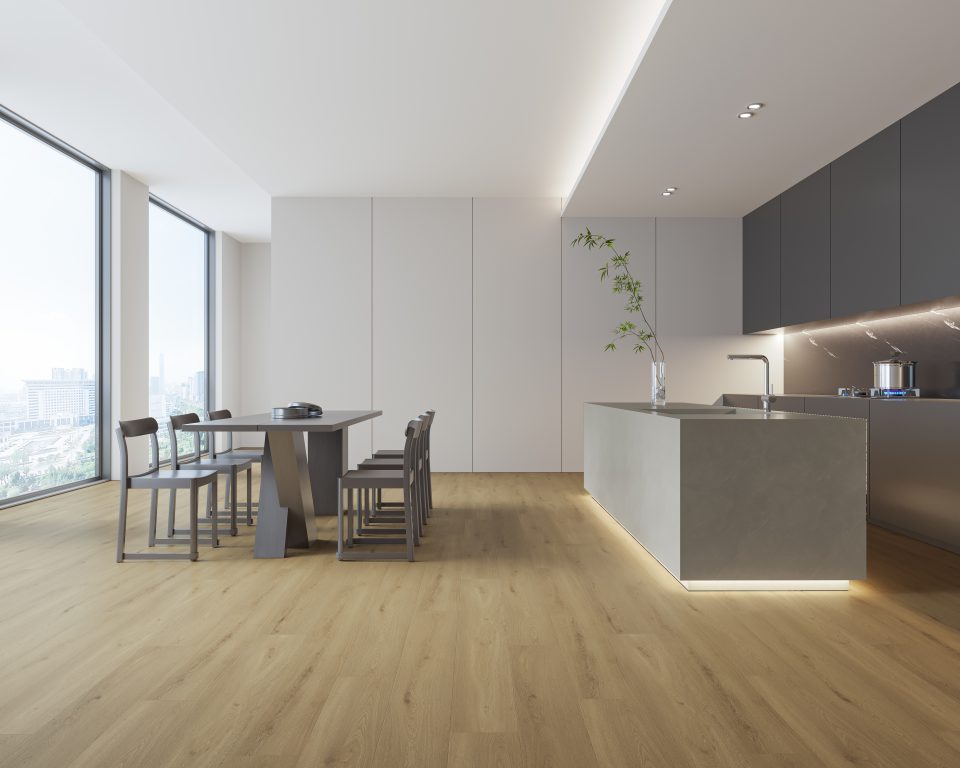
Laminate flooring is built around a dense fibreboard core made from compressed timber fibres, topped with a high-resolution image of timber and a hard-wearing clear surface. It has been a family-home favourite for decades because it delivers a remarkably convincing timber look at a price that leaves room in the budget for the rest of the renovation.
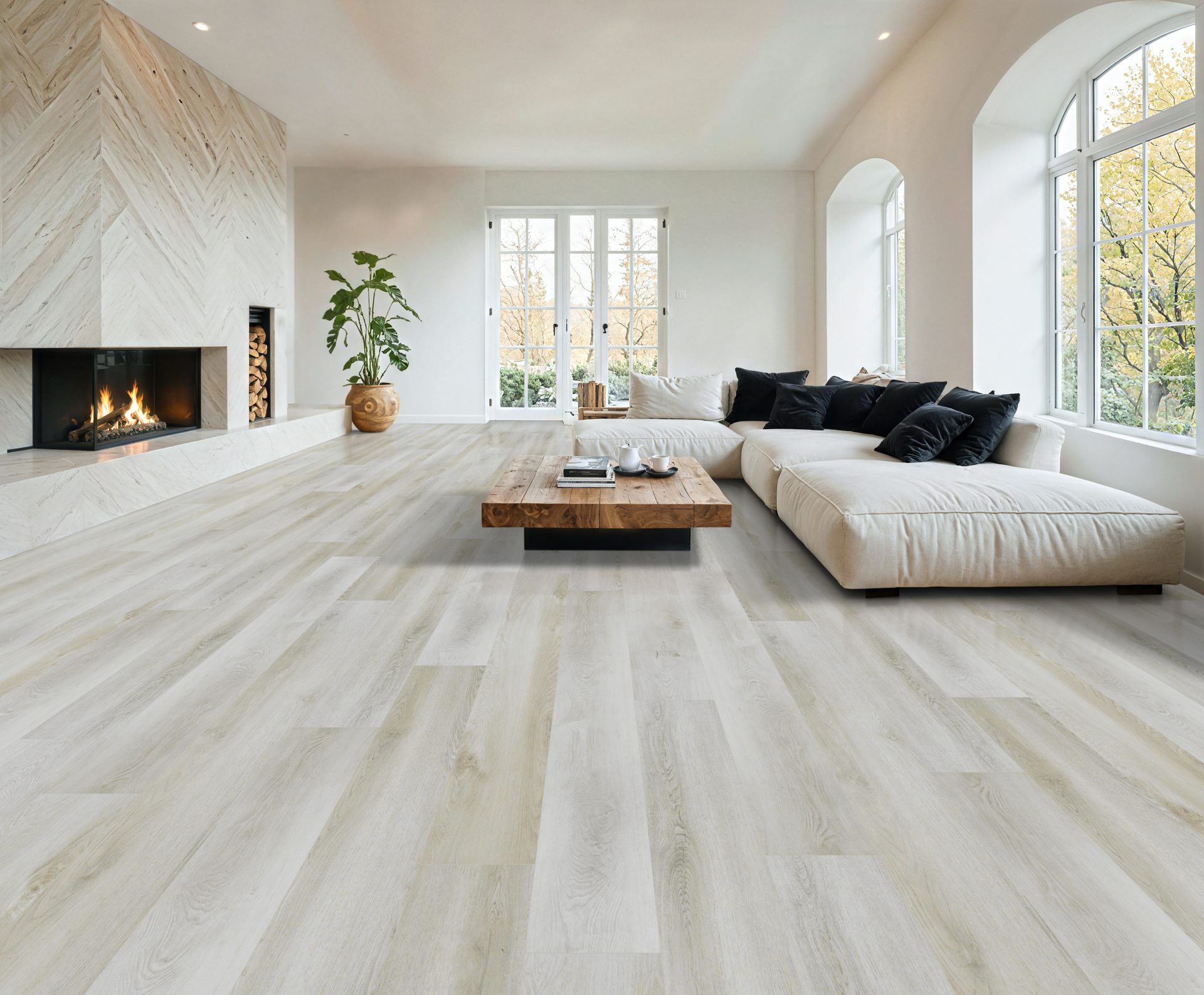
Modern laminate has come a long way from the shiny, repetitive boards of the past. Deep embossed grain textures follow the printed pattern, edges are bevelled like real boards, and the surface is one of the most scratch-resistant in flooring, which is why laminate remains so popular with households juggling kids, pets and furniture.
Key Differences Between Hybrid And Laminate
- Water performance – the difference that matters most. Hybrid’s plastic composite core does not swell when wet, and many ranges are rated waterproof, which opens up kitchens, laundries and other spill-prone spaces. Laminate’s timber-fibre core handles everyday humidity well, but standing water can soak into the core and cause permanent swelling, so it is happiest in dry areas of the home.
- Scratch resistance – laminate quietly wins here. Its melamine surface is among the hardest in flooring and shrugs off claws, toys and dragged chairs. Quality hybrid ranges are also very scratch-resistant, but a thick wear layer matters more, so compare wear layers when you compare ranges.
- Feel and sound underfoot – hybrid feels dense and sounds quiet, helped by the attached underlay in most ranges. Laminate feels firm and can sound crisp or hollow if the underlay is basic, so pairing laminate with quality underlay makes a bigger difference than most people expect.
- Looks – both are printed floors, and both look convincing in a modern range. Laminate’s deeper embossing gives it a slight edge for texture realism, while hybrid planks often come in longer, wider formats that suit open plan spaces.
- Stability in Australian conditions – hybrid’s rigid core barely reacts to heat and sun, a real advantage in rooms with big glass doors and harsh afternoon light. Laminate is stable indoors but appreciates more expansion allowance in large, sun-soaked areas.
- Cost – laminate usually starts lower, making it one of the most cost-effective paths to a timber look. Hybrid sits a step up, and part of what you pay for is the attached underlay and the moisture insurance. Compare the finished project cost rather than the per-metre price, because underlay and preparation change the equation.
- Repairs – both are floating floors, so damaged boards can be replaced by a flooring professional, though it is easier near the edges of a room than in the middle. Keeping a box of spare boards from your installation is a smart habit with either floor.
Hybrid And Laminate Flooring Disadvantages
No floor is right for every room, and the honest limitations matter as much as the strengths.
Hybrid flooring disadvantages
- Price – hybrid costs more than laminate for a similar look, partly because the underlay comes attached.
- Texture depth – its printed surfaces are convincing, though laminate’s deepest embossed textures still hold a slight edge.
- Range variation – wear layer quality varies widely between entry-level and quality ranges, so the specification sheet matters more than the brochure.
- Waterproof has limits – the plank is waterproof, not the room. Water that finds its way beneath any floating floor still needs to be dealt with.
Laminate flooring disadvantages
- Standing water – the timber-fibre core swells if water soaks in, so laundries and wet areas are the wrong rooms for it.
- Sound – it can sound hollow underfoot on basic underlay, which is why underlay choice deserves real attention.
- Surface repairs – once the surface is damaged, the fix is replacing the board rather than repairing it.
Wear Ratings And Wear Layers
Two small numbers tell you most of what you need to know when comparing ranges. Laminate is graded with an AC rating: AC3 suits bedrooms and standard living areas, AC4 is made for busy family homes and hallways, and AC5 is commercial grade. Hybrid is measured by its wear layer thickness: 0.3mm handles typical residential life comfortably, while 0.5mm is the safer choice for big dogs, heavy traffic and homes that entertain often. Whichever product you lean towards, these figures are on every specification sheet and they are far better guides than price alone.
Humidity And Australian Summers
Australian summers work floors harder than most showrooms admit, especially through Queensland and along the coast where humidity swings are part of life. Hybrid’s stone-composite core is essentially indifferent to it, which is why it has become the default choice in tropical and subtropical homes. Laminate performs well indoors too, but its timber-fibre core does breathe with the seasons, so correct expansion gaps and a proper acclimatisation period before installation matter more in humid regions. Both floors appreciate blinds or curtains where harsh western sun lands directly on the boards.
What Do They Cost?
As a starting point for budgeting, the typical Australian market ranges sit roughly here:
| Cost component | Laminate | Hybrid |
|---|---|---|
| Planks, supply only (per m2, RRP) | Around $20 to $50 | Around $30 to $80 |
| Underlay (per m2) | Around $5 to $15 | Usually attached |
| Installation and preparation (per m2) | Around $25 to $40 | Around $25 to $40 |
Prices shown are RRP (recommended retail price). Every home measures differently, so treat these figures as context for reading quotes rather than a price list, and always compare itemised quotes for your actual rooms. For a full breakdown of what drives the price of a hybrid project, our hybrid flooring cost guide walks through every component. For the laminate side, our laminate flooring cost guide covers board, underlay and installation ranges in the same detail.
Which Should You Choose?
Lean towards hybrid flooring if you want one floor flowing through the whole home including the kitchen and laundry, if spills and moisture are part of daily life, or if your living areas take serious afternoon sun.
Lean towards laminate flooring if your project covers living areas, bedrooms and hallways, if scratch resistance for pets and kids is the priority, or if you want the most timber look for your budget.
Plenty of homes use both: laminate through the bedrooms and living spaces, with a waterproof floor in the wet areas. If you are weighing up more options than these two, our guide to the best flooring for Australian homes compares every major flooring type room by room.
Care And Cleaning
Day to day, the two floors ask for the same easy routine: regular sweeping or vacuuming to keep grit off the surface, a well-wrung damp mop with a pH-neutral cleaner, and felt pads under furniture. The one difference is water discipline. With laminate, wipe spills promptly and keep the mop damp rather than wet so moisture never reaches the core. With hybrid, the planks themselves are unbothered by spills, though it is still good practice not to leave water pooling on any floating floor. Neither floor ever needs sanding, polishing or waxing, which is a big part of why both are so popular with busy households.
Frequently Asked Questions
- Is hybrid or laminate flooring better? – neither is better everywhere. Hybrid wins on water performance and whole-home flexibility, laminate wins on surface toughness and value. The right answer depends on the rooms you are flooring.
- What is the main difference between hybrid and laminate? – the core. Hybrid uses a waterproof stone-plastic composite, laminate uses a dense timber fibreboard. Almost every other difference flows from that.
- Can laminate be used in kitchens? – many modern laminates with tight joins and water-resistant coatings perform well in kitchens when spills are wiped promptly. For laundries and consistently wet areas, hybrid or vinyl is the safer call.
- Do hybrid and laminate cost the same to install? – installation is similar since both float over underlay, but laminate usually needs underlay added while most hybrid includes it. An itemised quote for your actual rooms gives the true comparison.
- Which lasts longer? – with the right floor in the right room, both serve a family home for many years. Lifespan comes down to wear layer or surface quality, correct installation and keeping water away from laminate’s core.
Conclusion
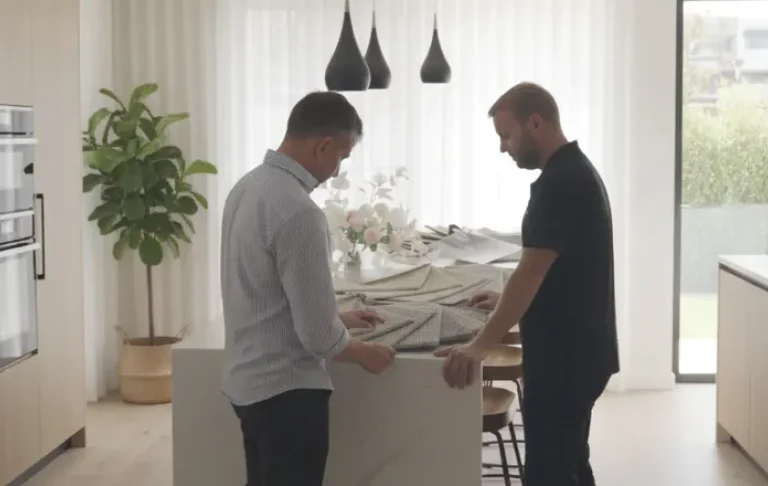
Hybrid vs laminate is really a question about your rooms. Laminate delivers outstanding toughness and value through the dry areas of a home, while hybrid buys the freedom to run one floor everywhere, wet areas included. Explore our hybrid flooring and laminate ranges to see what each looks like in current designs. Better still, see them in your own home. Our mobile showroom brings both to your door, so you can compare planks side by side in your own lighting, in the rooms they will actually live in. Book a free in-home measure and quote when you are ready.