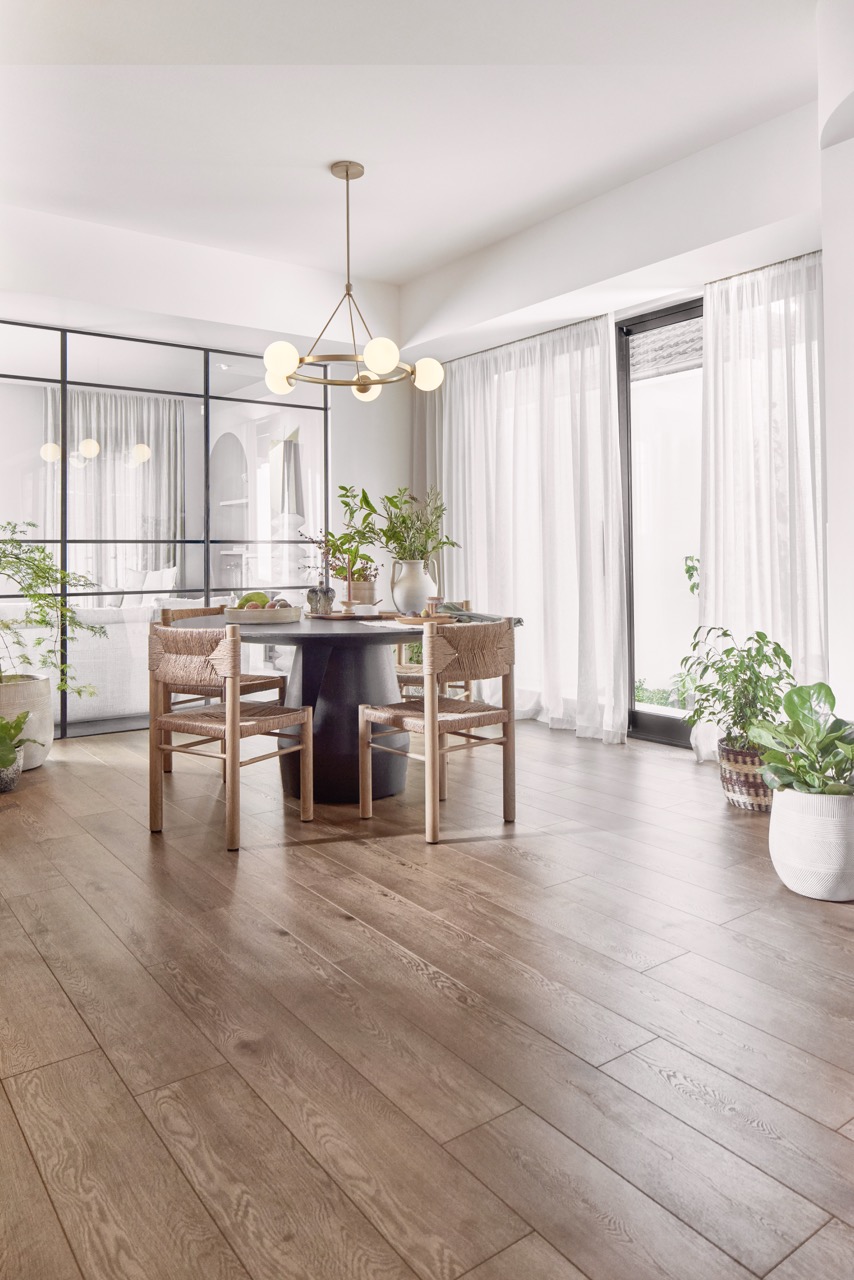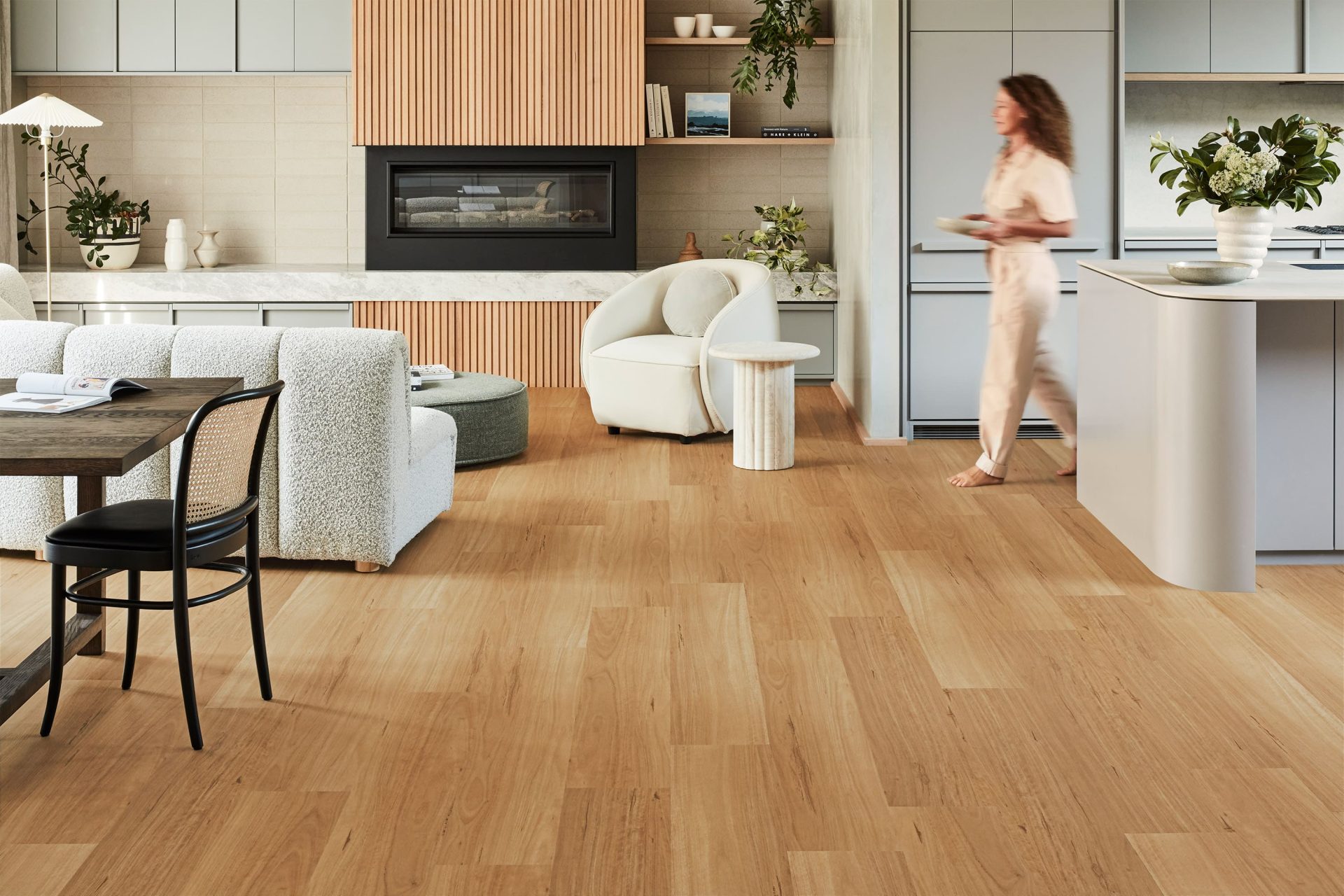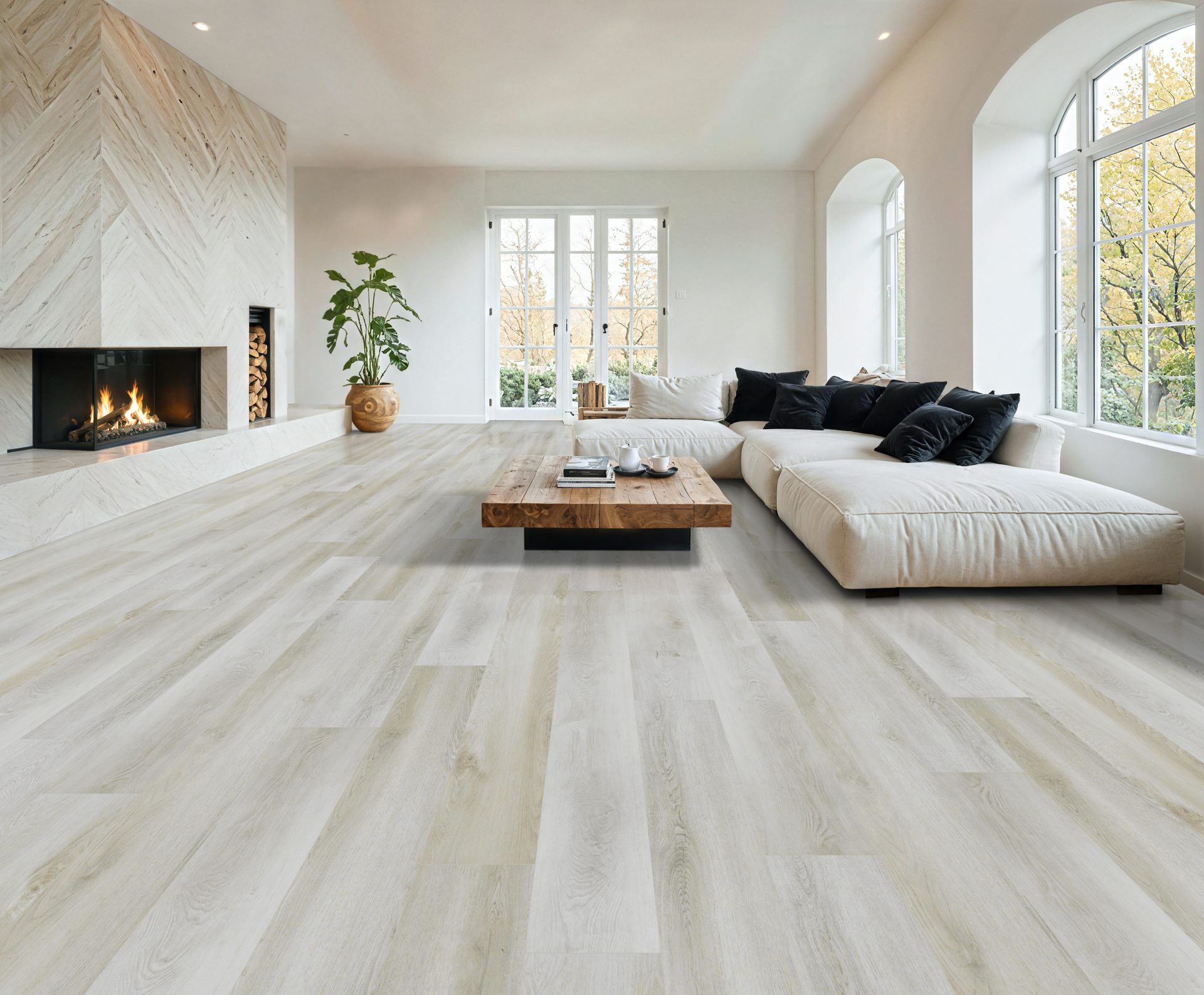
The short answer: vinyl planks suit rooms where spills are part of life, because the planks themselves are waterproof and generally quiet and forgiving underfoot. Laminate holds its own in dry living areas, with excellent scratch and abrasion resistance depending on its product classification and surface construction. And if you keep going back and forth, hybrid flooring exists precisely because it combines the strengths of both.
Laminate and vinyl planks are the two most compared floors in Australian renovations, and for good reason: both deliver convincing timber looks with strong durability at accessible prices. The differences hide in the construction, and they decide which rooms each one should live in. If you are comparing categories more broadly, our room-by-room flooring guide covers the whole field.
What Is Laminate Flooring?
Laminate is built on a dense fibreboard core with a printed timber visual under a hard melamine wear surface. That surface is its superpower:
- Scratch resistance – laminate generally offers excellent scratch and abrasion resistance, depending on its product classification and surface construction. AC ratings are the usual guide here. They come from a European classification system (EN 13329), not an Australian Standard, and AC4 suits most busy homes.
- Realistic texture – embossed surfaces that follow the grain convincingly.
- Solid, quiet feel – the dense core feels firm and substantial underfoot.
Its limit is water: the timber-based core swells if moisture reaches it through joins or edges, which is why laminate prefers dry rooms and prompt spill habits.
What Is Vinyl Plank Flooring?
Vinyl planks are made entirely from waterproof materials, usually glued directly to the subfloor:
- Waterproof construction – the plank itself cannot swell, so everyday spills are no drama. For bathrooms and laundries, suitability still depends on the specific product, how it is installed and the manufacturer’s requirements, and building requirements vary between states and territories. Check the instructions and your local authority or certifier before planning wet areas.
- Quiet and forgiving – generally quiet, and can feel warmer or more forgiving underfoot, though this varies with thickness, backing, subfloor and installation.
- Stable under weight – glue-down installation handles heavy appliances and furniture without complaint.
The trade-off is surface hardness: vinyl scratches more readily than laminate under dragged furniture and pet claws, though the gap depends on the product. Wear layer, surface coating and overall construction all play a part.
Laminate vs Vinyl: The Key Differences
| Laminate | Vinyl Planks | |
|---|---|---|
| Core | Dense timber fibreboard | Waterproof PVC composite |
| Water | Water resistant at best; core swells if soaked | Waterproof plank; wet-area use depends on the product and installation |
| Scratch resistance | Very good to excellent (AC classified, varies by product) | Good, varies with wear layer and surface coating |
| Feel underfoot | Firm and solid | Generally quiet; can feel warmer and more forgiving (varies by product) |
| Sound | Can be clicky without good underlay | Quiet |
| Installation | Floating click system | Usually glue-down |
| Typical lifespan | 10 to 15 years | 10 to 20 years |
Which Is Better For Each Room?
- Kitchens and spill-prone areas – vinyl’s waterproof construction gives it the edge wherever water is on the schedule.
- Bathrooms and laundries – some vinyl products suit these rooms, but it depends on the specific product, its installation system and the manufacturer’s requirements. Building requirements also vary between states and territories, so confirm with the manufacturer’s instructions and your local authority or certifier.
- Living rooms and hallways – laminate, if the room stays dry. Its scratch resistance pays off exactly where the traffic and furniture live.
- Bedrooms – either performs; the choice comes down to the look and feel you prefer.
- Whole-home installs – this is where hybrid comes into its own, with a waterproof core and one consistent look through the living spaces. Wet areas still need the same product-specific checks.
Is Laminate Cheaper Than Vinyl?
They overlap more than they differ. As a guide, laminate planks run around $30 to $100 per square metre supply + GST (RRP; $33 to $110 inc GST), with installation costs on top, while vinyl plank projects typically install at around $55 to $110 per square metre + GST (RRP; $60.50 to $121 inc GST), with glue-down preparation accounting for some of that difference. In practice the range you choose moves the price more than the category does, so compare the specific products on your shortlist and confirm with a written quote. If you want the laminate numbers in more depth, our laminate flooring cost guide explains what moves a project up or down the range. The vinyl side has the same treatment: our vinyl plank cost guide breaks down installed ranges and why subfloor preparation separates otherwise similar quotes.
Where Hybrid Fits In
Hybrid flooring was engineered to end this exact debate: a rigid waterproof core like vinyl with a firm, stable feel closer to laminate. It costs a little more than either, and for whole-home installs that flexibility is usually worth it. Our hybrid vs laminate and SPC flooring guides pick up that thread.
Frequently Asked Questions
- Is vinyl plank flooring better than laminate? – vinyl’s waterproof construction gives it the edge in spill-prone rooms, while laminate answers back with strong scratch resistance in dry living areas. Neither is universally better; the room and the specific product decide.
- Which lasts longer, laminate or vinyl? – protected from moisture, both serve 10 to 15 years or more, with quality vinyl often stretching further. Water exposure is what shortens laminate’s life early.
- Can you use laminate in a kitchen? – it is done often and survives on good habits, but a dropped pot of water or a slow leak can swell the core permanently. A waterproof-core floor such as vinyl or hybrid removes the swelling risk in the plank itself, though wet-area suitability still depends on the specific product and its installation requirements.
- Which feels better underfoot? – vinyl is generally quiet and can feel warmer or more forgiving underfoot, though this varies with thickness, backing, subfloor and installation. Laminate feels firmer and more like walking on timber. It is worth standing on both before deciding.
- Which looks more realistic? – modern versions of both are convincing. Laminate often edges ahead on surface texture, while vinyl’s advantage is that its looks handle everyday moisture without worry.
Is vinyl flooring toxic?
Modern vinyl planks are low-VOC and certified to Australian emission standards, a long way from the sheet vinyl of past decades. Any new-floor smell fades within days with normal airing.
Did old vinyl floors contain asbestos?
Some sheet vinyl from before the mid 1980s did, usually in the backing, and modern vinyl contains none. If your home still has flooring from that era, you do not need to work out what it is yourself. Our team looks at what is underfoot as part of every free measure, and if anything about an older floor needs checking before replacement we will tell you and point you in the right direction.
A Quick Note On Requirements
Installation methods and requirements vary between states and territories, and between products. Always follow the manufacturer’s installation instructions for the range you choose. If you are unsure, confirm requirements with your local authority, certifier or governing body, which in Queensland is the QBCC.
Standing On Both Before You Choose
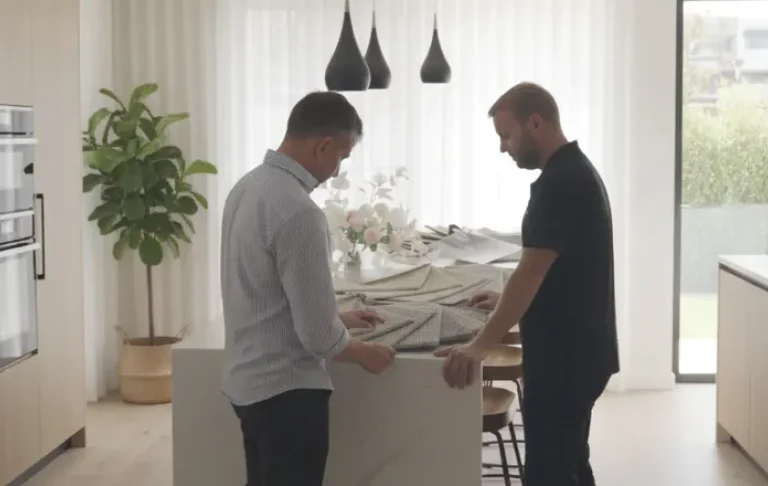
This comparison settles itself fastest underfoot, which is hard to arrange in a store aisle and easy at home. Our mobile showroom brings our laminate and vinyl plank flooring ranges to you, so you can feel the difference in the rooms each floor would live in, compare visuals in your own light, and get honest advice on classifications, wear layers and where each belongs, with a professional measure in the same visit. Book a free in-home measure and quote when you are ready.