Vinyl floors have a well-earned reputation as some of the easiest floors to live with. No sanding, no polishing, no complicated routines. A quick sweep and an occasional damp mop keep them looking the way they did on day one. The catch is that a few common cleaning habits, often carried over from other floor types, can slowly damage the wear layer that keeps vinyl looking good.
This guide covers the simple routine that works, a homemade cleaner that costs cents, the truth about vinegar, fixes for scuffs, stains and dull patches, and the short list of things to keep well away from your vinyl planks.
The Simple Cleaning Routine
Vinyl needs just two habits. Sweep or vacuum regularly to remove the grit that scratches the surface underfoot, then damp mop with a pH-neutral cleaner when the floor needs a proper clean. That is genuinely it. For most homes that means a quick vacuum every few days in busy areas, weekly elsewhere, and a mop once a week or fortnight depending on traffic, kids and pets.
- Vacuum or sweep first, always – mopping over loose grit drags it across the floor like fine sandpaper. Use a soft-bristle broom or a vacuum with the beater bar switched off.
- Damp, not wet – a well-wrung microfibre mop is all vinyl needs. Water sitting in puddles can work into joins and edges over time, even on waterproof planks.
- pH-neutral cleaner – harsh alkaline or acidic products slowly dull the wear layer. Anything labelled pH-neutral and suitable for vinyl is right; your flooring manufacturer’s care guide is where you should start.
- Spot-clean spills as they happen – vinyl shrugs off spills better than almost any floor, but sticky residue left behind attracts dirt and turns into tomorrow’s grubby patch.
A Homemade Vinyl Floor Cleaner
You do not need a shelf of products. Two mixes cover almost everything:
- Everyday mix – a few drops of mild dishwashing liquid in a bucket of warm water. Wring the mop out well and follow with a clean-water pass so no soapy film is left behind. Leftover soap is the most common cause of dull, streaky vinyl.
- Streak-free shine mix – half a cup of white vinegar in four litres of warm water. The mild acidity dissolves cleaner residue and dries without streaks, which is why it is the go-to when floors look filmy rather than dirty.
Can You Use Vinegar On Vinyl Floors?
Yes, diluted white vinegar is safe on almost all modern vinyl floors, including vinyl planks and luxury vinyl plank (LVP). The mix above is gentle enough for regular use and leaves a clean, streak-free finish. A few sensible cautions:
- Always dilute it – undiluted vinegar is acidic enough to dull the finish over time. Half a cup to four litres of water is plenty.
- Skip it on waxed or polished floors – older sheet vinyl that has been wax-polished will lose its shine to vinegar. Modern planks are never waxed, so this mainly applies to older floors.
- Check your care guide – a small number of manufacturers specify their own cleaner for warranty purposes. Two minutes with the care guide settles it.
Deep Cleaning, Step By Step
Once or twice a year, or whenever the floor is looking tired, give it a proper reset:
- Vacuum thoroughly, including edges and under furniture where grit gathers.
- Mop with the everyday mix, working in sections so you can wring the mop often.
- Treat any marks and scuffs (see the fixes below) while the floor is clean.
- Do a final pass with the vinegar mix to remove residue and finish streak-free.
- Let the floor air dry, or towel-dry joins and edges if you have been generous with the water.
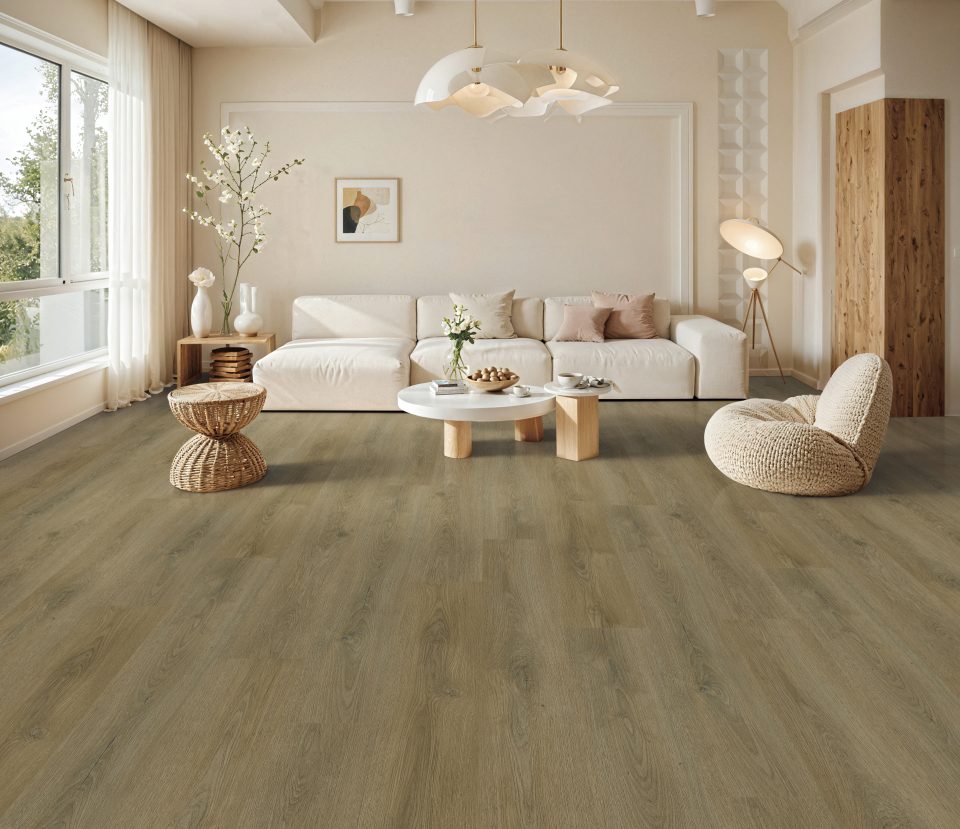
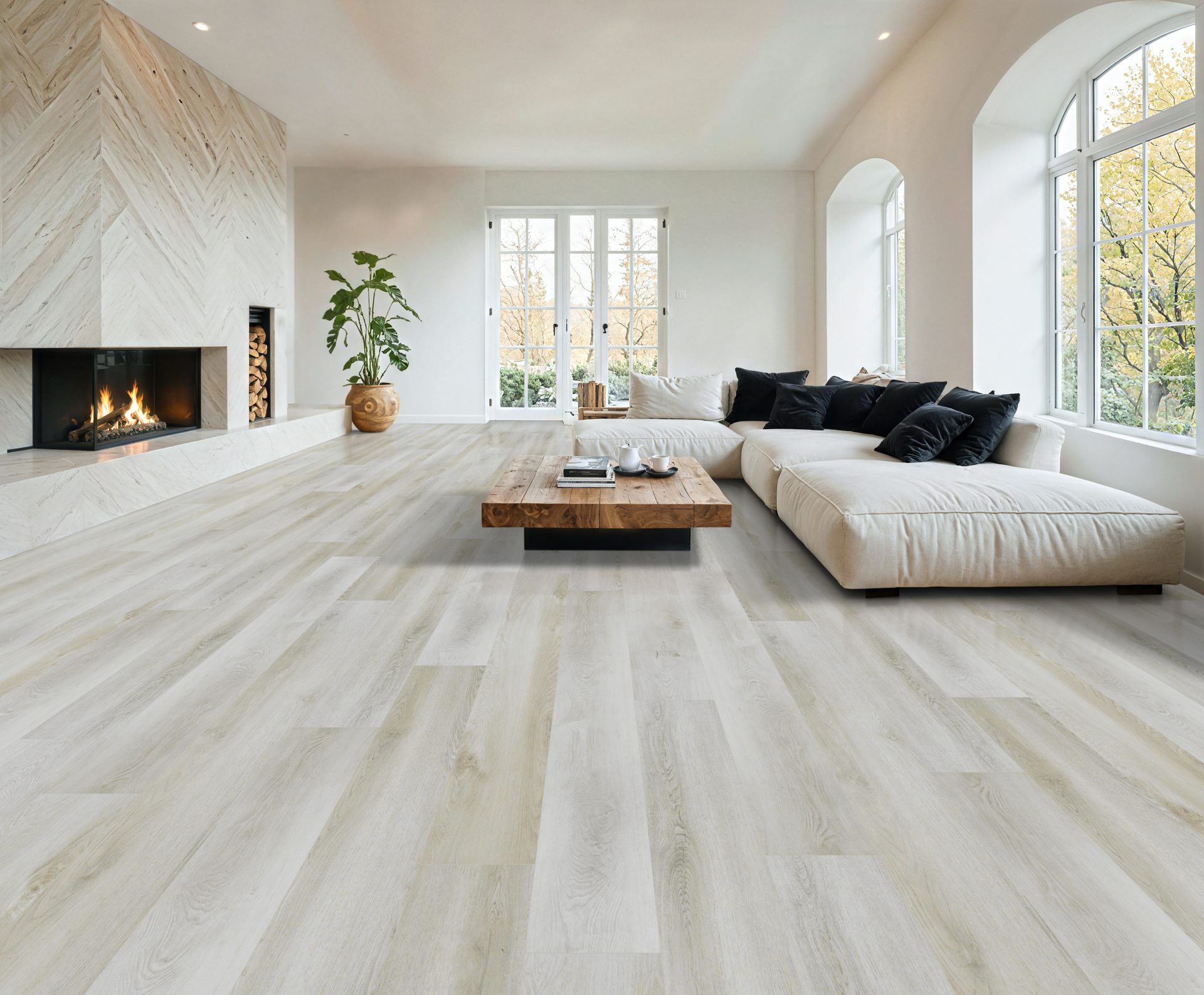
Pictured: Mesmerized vinyl planks in Myth
Fixing Common Problems
- Scuff marks – rub gently with a clean tennis ball or a white eraser. For stubborn scuffs, a little bicarb soda on a damp cloth works without scratching.
- Stains and discolouration – make a paste of bicarb soda and water, sit it on the mark for a few minutes, then wipe gently with a soft cloth. Works on most food, drink and general mystery marks.
- Sticky spots and grease – warm water with a drop of dishwashing liquid, applied with a soft cloth rather than poured on. Wipe, rinse, dry.
- Dull or streaky patches – almost always built-up cleaner residue rather than damage. Mop with the vinegar mix and the shine usually comes straight back.
- Fine scratches – light surface scratches often become less visible with a clean and a manufacturer-approved vinyl polish or refresher. Deep scratches in a plank floor have a better fix: individual planks can often be replaced, which is one of the quiet advantages of vinyl planks.
What To Keep Away From Vinyl
The short list that causes most of the damage we see:
- Steam mops – the combination of heat and forced moisture can affect adhesives and joins, and most vinyl manufacturers exclude steam cleaning from their warranties. It is the most common well-intentioned mistake.
- Bleach, ammonia and acetone – all three are harsh enough to discolour or soften vinyl. There is no mark on a vinyl floor that needs them.
- Abrasive pads and steel wool – they scratch the wear layer permanently. Soft cloths and microfibre do the same job safely.
- Wax and oil-based polish – modern vinyl is designed to hold its finish without wax, and polish just builds a filmy layer that dulls the floor and gets slippery.
- Rubber-backed mats – some rubber backings react with vinyl over time and leave a yellow shadow. Choose mats labelled safe for vinyl.
Day To Day Protection
A few small habits stretch the years between now and your next flooring project: felt pads under chairs and furniture legs, mats at external doors to catch grit before it comes inside, lifting rather than dragging heavy items, and curtains or blinds where harsh afternoon sun sits on the floor for hours. None of it takes effort, and all of it protects the wear layer that keeps the floor looking new.
Frequently Asked Questions
- What is the best cleaner for vinyl plank floors in Australia? – any pH-neutral hard floor cleaner suits vinyl. Bona’s hard-surface floor cleaner is a widely available example that flooring manufacturers commonly recommend, and always check your own manufacturer’s care guide first, because cleaning with a product that is not approved can void the warranty. Between proper cleans, the dishwashing liquid and vinegar mixes above handle everyday cleaning for cents.
- Can you mop vinyl floors? – yes, and you should. Just keep the mop damp rather than wet, and vacuum first so you are not spreading grit.
- How do you make vinyl floors shiny without streaks? – remove the residue causing the dullness with the vinegar mix, then let the floor air dry. Skip wax and gloss polishes; they create the film that causes streaks in the first place.
- Can you use a steam mop on vinyl planks? – no. Heat and pressured moisture can affect the joins and adhesive, and it usually voids the warranty. A damp microfibre mop achieves the same clean safely.
- How often should vinyl floors be cleaned? – vacuum busy areas every few days, mop weekly to fortnightly, and deep clean once or twice a year. Homes with pets or sandy feet from the beach lean towards the more frequent end.
Keeping Floors Looking New
Vinyl rewards the smallest maintenance routine of any floor: keep grit off it, mop it damp with a gentle cleaner, and keep steam and harsh chemicals away. Do that and a quality vinyl floor will look after itself for years.
If you are still weighing up vinyl against other options, our comparison of hybrid flooring vs vinyl planks explains how the two relate, and our guide to the best flooring for Australian homes compares every major option room by room. And if your current floor is past the point where cleaning helps, our mobile showroom brings our full luxury vinyl plank flooring range to your home, so you can compare colours and textures in your own lighting before you decide. Book a free in-home measure and quote whenever you are ready.