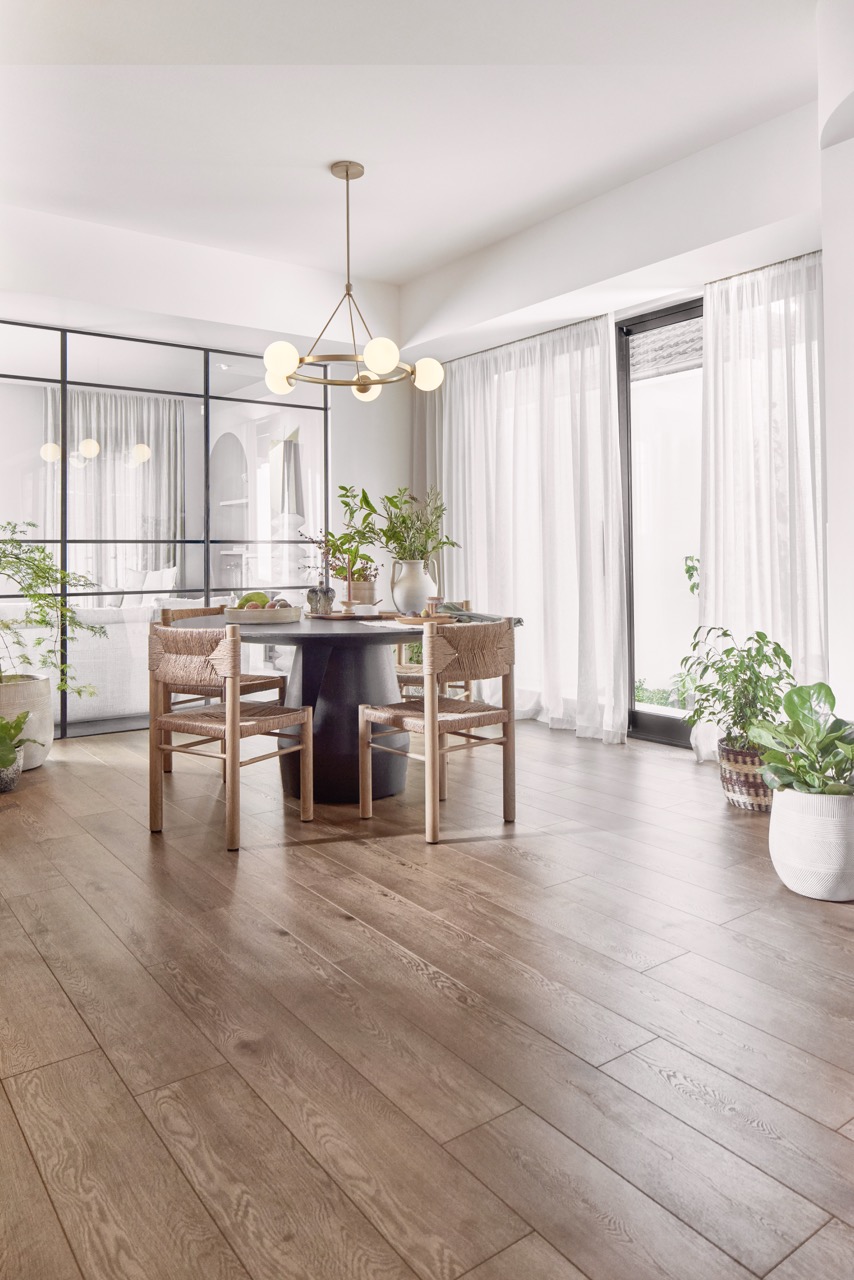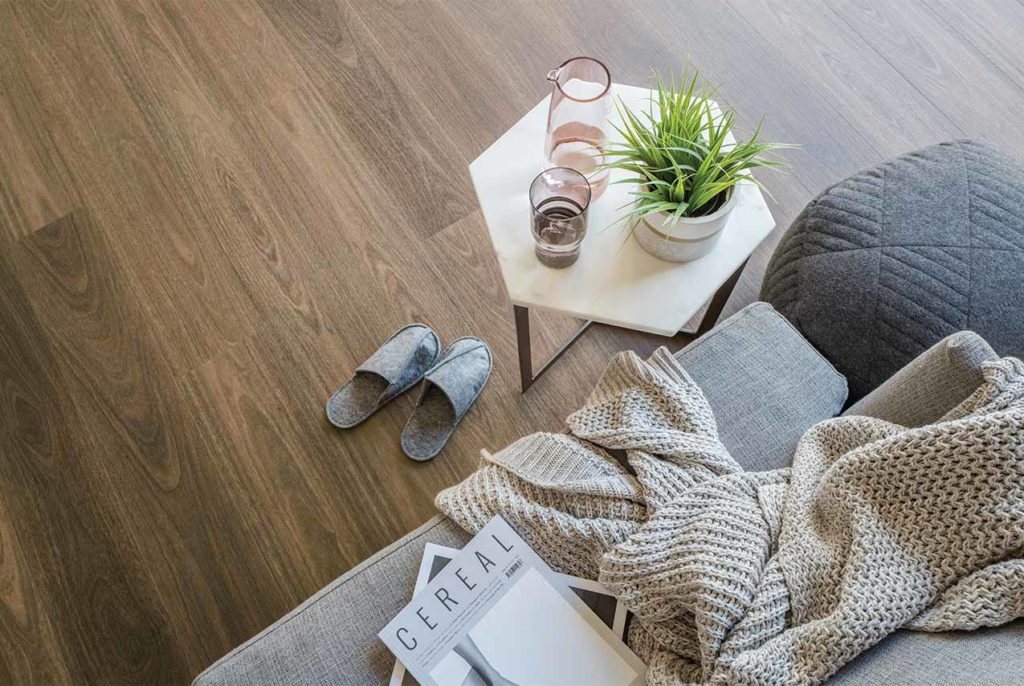
SPC and WPC are the two core technologies inside hybrid flooring. SPC uses a dense limestone composite core with good dimensional stability and a solid feel underfoot; WPC uses a wood-polymer core that feels slightly softer and warmer but gives up some density. Most hybrid flooring sold in Australia today is SPC, and for most homes it is the safer choice.
Both have waterproof cores, both click together as floating floors, and both wear a printed timber visual under a protective layer. The difference lives in the core, and it changes how each one feels, performs and suits particular rooms. Here is the comparison in plain terms. If you are earlier in your research, our guide to what SPC flooring is starts one step back.
What Is SPC Flooring?
SPC stands for Stone Plastic Composite. The core is made mostly of limestone powder bound with polymer, compressed into a thin, dense, rigid board. That density is its signature: SPC has good dimensional stability through temperature changes, feels firm and solid underfoot, and its slim profile keeps floor heights low against tiles and carpet.
What Is WPC Flooring?
WPC stands for Wood Plastic Composite. The core blends wood flour with polymer and a foaming agent, producing a thicker, lighter board with a little give in it. That cushioning makes WPC feel softer and slightly warmer underfoot, and its extra thickness can bridge minor subfloor imperfections more forgivingly.
SPC vs WPC: The Key Differences
| SPC | WPC | |
|---|---|---|
| Core | Limestone composite, dense and rigid | Wood-polymer, lighter with slight give |
| Feel underfoot | Firm and solid | Softer and warmer |
| Stability in heat | Very good; movement allowances vary by product | Good, moves slightly more |
| Waterproof core | Yes | Yes |
| Dent resistance | Higher, dense core resists furniture marks | Lower, softer core can dent under point loads |
| Typical availability in Australia | The majority of hybrid ranges | A smaller share of ranges |
SPC vs WPC vs Laminate
Laminate belongs in the same conversation because it competes on look and price. Laminate generally offers excellent scratch and abrasion resistance, depending on its product classification and surface construction, but it is the only one of the three whose core swells if water finds a way in. In short: laminate for surface toughness in dry areas, SPC for waterproof-core practicality through most of the home, WPC for the softest feel of the three. Our hybrid vs laminate comparison covers the laminate side in full.
Which Should You Choose?
- Choose SPC – for busy family homes, kitchens, rooms with strong sun, and anywhere furniture is heavy. Its stability and dent resistance make it the default recommendation for most Australian homes. For laundries and bathrooms, check the specific range first: wet-area suitability depends on the product, its installation system and the manufacturer’s requirements, and building requirements vary between states and territories.
- Choose WPC – when underfoot softness and warmth are the priority, such as bedrooms and quiet living spaces, and the range you love happens to be WPC.
In practice the decision is usually made by the range: you fall for a colour and board format first, then confirm the core suits the rooms it is going into.
Frequently Asked Questions
- What does WPC stand for in flooring? – Wood Plastic Composite, describing a core made of wood flour blended with polymers. It is the softer, thicker cousin of SPC.
- Is SPC or WPC more waterproof? – both cores are waterproof. The difference under spills is nil; the differences that matter are feel, stability and dent resistance. Wet-area suitability for either depends on the specific product and its installation requirements.
- Is SPC the same as hybrid? – hybrid is the product category and SPC is the most common core inside it. WPC hybrids exist but hold a smaller share of the Australian market.
- Which is better for Queensland heat? – SPC’s denser, more rigid core gives it good dimensional stability through hot summers, though movement allowances vary by product. Most floating SPC floors still need perimeter and transition allowances, while some specialised SPC ranges are designed for reduced allowances, so check the specification for the range you choose.
- Which lasts longer, SPC or WPC? – with comparable specifications, similar. Durability comes from more than the wear layer alone: surface coating, joint strength and core quality all play a part. SPC’s dent resistance gives it an edge in hard-working rooms, while WPC’s comfort advantage suits gentler spaces where wear is light anyway.
A Quick Note On Requirements
Installation methods and requirements vary between states and territories, and between products. Always follow the manufacturer’s installation instructions for the range you choose. If you are unsure, confirm requirements with your local authority, certifier or governing body, which in Queensland is the QBCC.
Feeling The Difference For Yourself
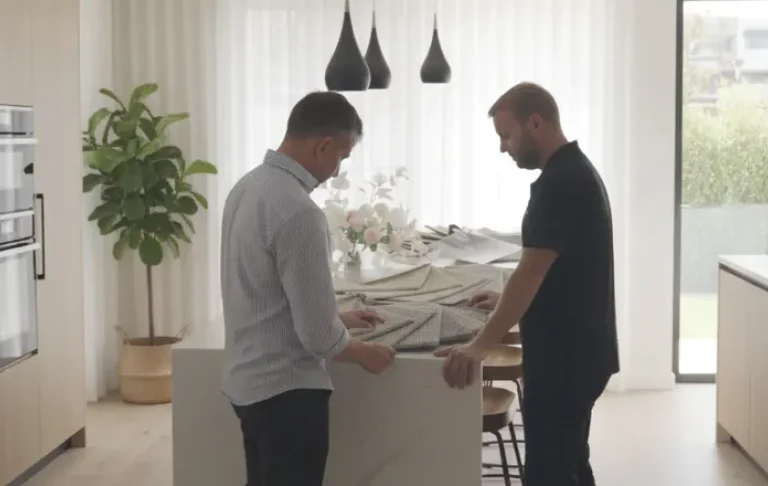
The SPC and WPC comparison makes itself the moment you stand on both. Our mobile showroom brings our hybrid flooring range to your home, so you can feel core density and softness side by side in the actual rooms, compare colours in your own light, and get plain-spoken advice on which construction suits each space, with a professional measure done in the same visit. Book a free in-home measure and quote when you are ready.