By Team Beare. Updated August 2026.
Hybrid flooring handles Queensland heat and humidity better than almost any other timber-look floor. Its rigid, water-resistant core barely moves with humidity swings that swell laminate and shift solid timber, which is a big part of why hybrid has become such a strong performer in Queensland homes. It is not invincible though. Direct sun, hot closed-up rooms and big temperature swings still deserve some planning, and this guide covers exactly how hybrid copes with each one.
Why Queensland Is Hard On Floors
Queensland asks more of a floor than most of the country. Summer humidity sits high for months, storms arrive with wet feet and dripping everything, and the sun through a west-facing window can make a room genuinely hot by mid afternoon. Homes are often closed up through the workday and then rapidly cooled when everyone gets home, so the floor rides a daily cycle of temperature and moisture changes.
Traditional flooring materials respond to those cycles by moving. Timber absorbs and releases moisture from the air, expanding in the humid months and shrinking in the dry ones. Laminate’s core is made from compressed wood fibres, so it reacts to humidity too, and it swells permanently if water gets into the joins. Any floor destined for a Queensland home needs to either tolerate that movement or be built from something that barely moves at all. Hybrid takes the second approach.
Rigid Core Stability In The Heat
The core of a hybrid plank is a dense composite of stone or wood particles bound in a polymer, rather than raw wood fibre. Our SPC flooring guide explains the construction in detail. That composition is the whole story of its stability. The core does not absorb moisture from the air the way timber and laminate cores do, so the humidity cycle that drives so much floor movement in Queensland largely passes it by.
Heat is the variable that does affect hybrid. Like most rigid plank products, hybrid expands slightly as it warms and contracts as it cools. The movement is small and predictable, and a correct installation absorbs it invisibly, but it is the reason the installation details in the sections below matter more in Queensland than in milder climates.
Core type plays a part here as well. Stone plastic composite (SPC) cores are the denser and more dimensionally stable of the two common types, which makes them a popular choice in hot climates, while wood plastic composite (WPC) offers a slightly softer feel. Our SPC vs WPC guide walks through the trade-offs in plain terms.
How Hybrid Handles Humidity
Humidity is where hybrid genuinely shines compared with the alternatives:
- No swelling joins – laminate’s weak point in humid climates is its edges, where moisture gradually finds its way into the wood-fibre core and causes peaking along the joins. Hybrid’s core is water resistant through its full thickness, so humid air and everyday moisture do not swell it.
- No seasonal gapping – solid timber boards shrink in dry winters and can open small gaps between boards, then tighten again in summer. Hybrid stays visually consistent year round.
- Storm-season resilience – wet umbrellas, dripping swimmers and tracked-in rain are everyday events in a Queensland summer. Hybrid handles this kind of top-down water without fuss, provided it is wiped up in reasonable time.
One honest caveat belongs here. Hybrid’s water resistance works from the top down. It is not protection against moisture rising from underneath, so a damp slab or a poorly ventilated subfloor still needs to be identified and addressed before installation. A moisture check of the subfloor at installation is standard practice and catches this early.
If you are comparing hybrid directly against laminate for a Queensland home, the humidity difference is one of the biggest deciding factors, and our hybrid vs laminate comparison covers it in more depth.
Queensland Sun And UV Fading
The sun is the Queensland challenge people think about least and notice most. Hours of direct sunlight through big windows, day after day, will gradually fade almost any flooring surface, and hybrid is no exception. Cheaper boards without UV-resistant coatings fade fastest, and the change often goes unnoticed until a piece of furniture moves and reveals the original colour underneath.
The practical defences are simple:
- Choose boards with UV protection – quality hybrid products build UV inhibitors into the wear layer, which slows fading dramatically. This is one of the invisible differences between budget and quality boards.
- Use your window furnishings – closing blinds or sheers through the harshest hours makes a measurable difference in full-sun rooms, and it keeps the room cooler as well.
- Consider colour choice – mid-tone and lighter boards tend to show gradual fading less obviously than very dark boards, where any lightening is easier to spot.
- Rotate the furniture occasionally – moving pieces from time to time keeps any fading even across the room instead of creating shadows.
West-Facing Rooms And Hot Afternoons
West-facing living areas are the toughest rooms in a Queensland home. They collect the full force of the afternoon sun exactly when the day is hottest, so the floor near the glass can become noticeably warm to the touch. For any floating floor, that localised heating is worth planning for.
In practice this means three things. First, this is the room where quality matters most, because dense, well made boards handle heat cycling better than lightweight budget ones. Second, window furnishings earn their keep here more than anywhere else in the home. Third, make sure your installer knows the room runs hot, because the expansion allowance around the perimeter is what lets the floor move harmlessly. Handled this way, hybrid performs well even in the hottest room of the house, where laminate joins and timber boards tend to show stress first.
Expansion Gaps In Hot Rooms
Every hybrid floor needs a small expansion gap around the edges of the room, concealed under skirting boards or trims. In Queensland this detail is not optional fine print, it is the difference between a floor that glides through summer and one that buckles in the first heatwave.
When a rigid plank floor warms, every plank expands a fraction, and across a whole room those fractions add up. If the floor has nowhere to move, the pressure has to go somewhere, and it goes up, lifting planks off the subfloor. The fix is entirely preventative:
- Perimeter gaps sized for the climate – installers in hot climates allow for the temperature range the room will actually experience, including closed-up summer days.
- Expansion joints in large open areas – very long uninterrupted runs of flooring may need a discreet expansion break, particularly in big open plan spaces that get plenty of sun.
- Nothing pinned through the floor – a floating floor must stay floating, so heavy built-in items should not clamp the planks to the subfloor.
None of this is visible in the finished floor, and none of it is a reason to hesitate. It is simply why a professional measure and installation matter more in a hot climate than a quick DIY estimate.
Air Conditioning And Temperature Swings
A very Queensland routine: the house sits closed and warm all day, then the air conditioning drives the temperature down fast in the evening. Floors experience that swing every day for months. Hybrid tolerates this cycling well precisely because its movement is small and elastic, expanding a little in the warm hours and settling back as the room cools, all within the allowance built into the installation.
Two habits help the floor along. Avoid extremes where you can, because a home that swings from very hot to heavily chilled every day is working every material in it, not just the floor. And during long absences in summer, a little ventilation or a moderate temperature setting is kinder to the whole home than letting rooms bake sealed for weeks. These are gentle recommendations rather than rules, and hybrid is forgiving either way.
The Verdict For Queensland Homes
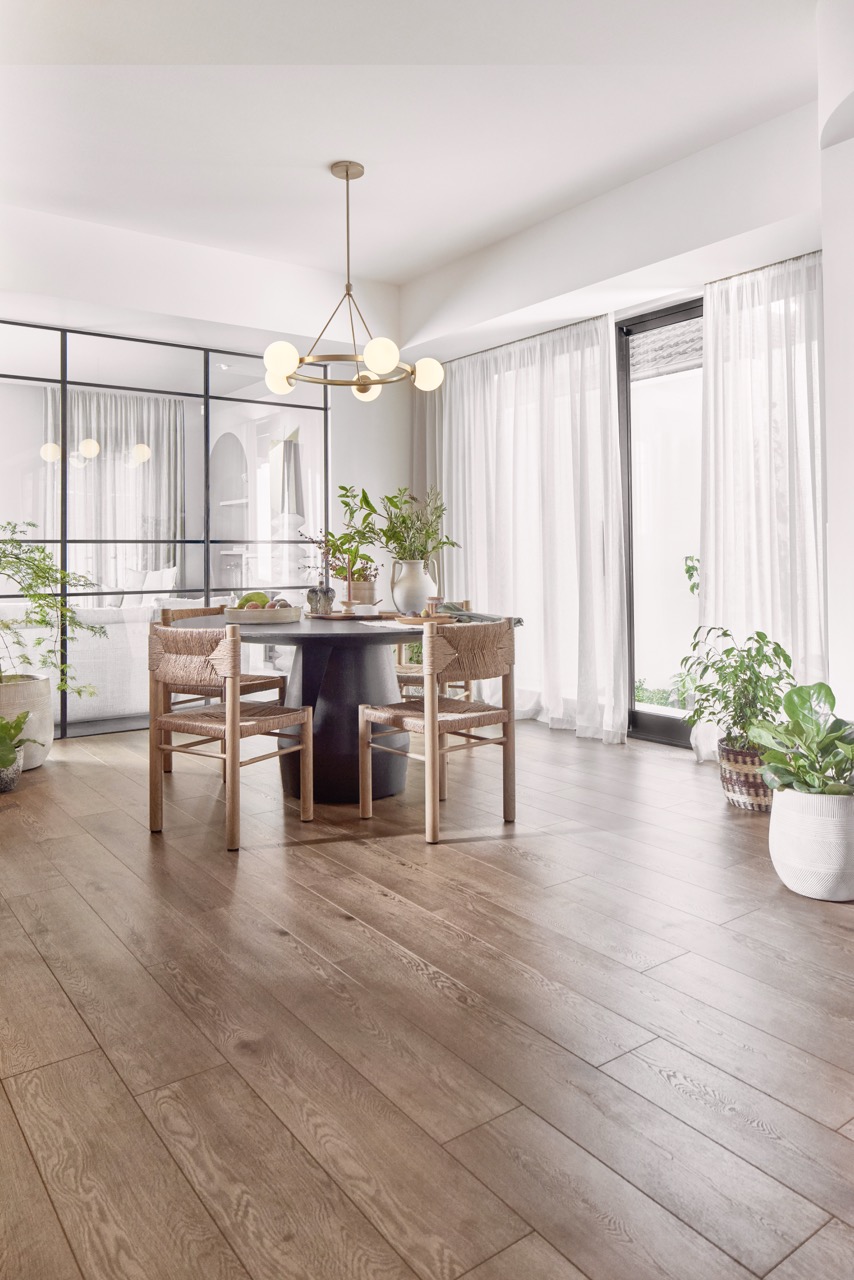
For Queensland conditions, hybrid is about as well matched as timber-look flooring gets. It ignores the humidity that troubles laminate, it holds its look year round where timber moves with the seasons, and its weak points, sun fading and heat expansion, are both managed with sensible product choice and correct installation. It also comes in styles that suit Queensland homes beautifully, from wide coastal oak tones to herringbone hybrid flooring for a more tailored look. If you are weighing up budgets and quality tiers, our hybrid flooring cost guide explains what separates entry-level boards from the ranges built to shrug off harsh conditions.
Please note that installation methods and requirements vary by state and territory. Always follow the manufacturer’s installation instructions for your chosen product, and confirm any building requirements with your local authority or certifier, such as the QBCC in Queensland.
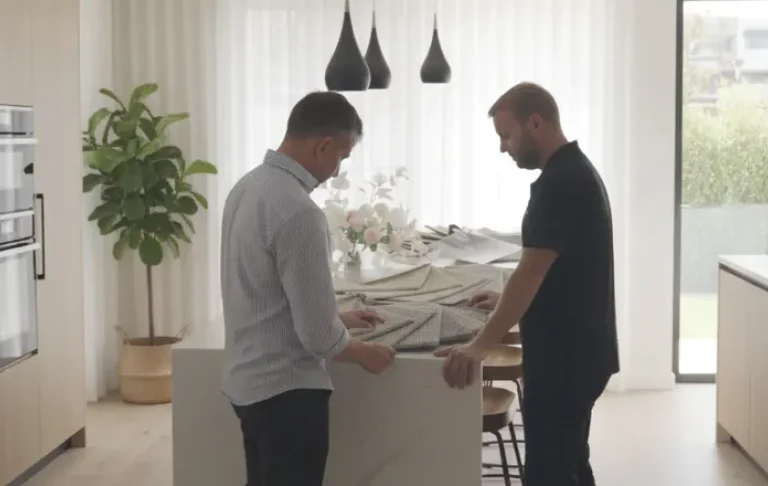
The surest way to know how a board will look and perform in your home is to see it there, in your light and your heat. Our mobile showroom brings the samples to you, and a free measure and quote takes care of the details that matter in a hot climate, from subfloor checks to expansion allowances. Browse the hybrid range or book a visit at a time that suits you.
Queensland Hybrid Flooring FAQs
- Does hybrid flooring expand in the heat? – Slightly, yes. Rigid core planks expand a small amount as rooms warm and contract as they cool. A correct installation includes expansion gaps around the room’s edges so this movement happens invisibly, which is why professional measurement matters in hot climates.
- Can hybrid flooring handle Queensland humidity? – Very well. The core does not absorb moisture from the air the way laminate and timber do, so months of high humidity do not swell the planks or open the joins. It is one of the main reasons hybrid suits Queensland homes.
- Will hybrid flooring fade in the Queensland sun? – Boards in direct sun for hours daily can fade gradually over the years, especially budget products without UV-resistant wear layers. Choosing a quality board and using window furnishings during the harshest hours keeps fading slow and even.
- Is hybrid flooring suitable for homes without air conditioning? – Yes. Hybrid does not need a climate controlled home, it simply needs an installation with proper expansion allowances for the temperatures the rooms will reach. Queensland homes without cooling run warmer, so the measure and installation details do a little more work.
- Is hybrid better than laminate in Queensland? – For humid climates, hybrid holds a clear advantage because its core is water resistant while laminate’s wood-fibre core swells when moisture gets in. Laminate still has strengths, so it is worth reading a full comparison before deciding, but humidity is firmly hybrid’s win.
- Do I still need expansion gaps in an air conditioned home? – Yes. Air conditioning reduces temperature swings but does not remove them, and rooms still warm up when the system is off, especially in summer. Expansion gaps are standard for every hybrid installation regardless of cooling, and they are hidden under the skirting anyway.