The short answer: most Australian hybrid flooring projects land between $80 and $140 per square metre supplied and installed (RRP), with the planks themselves ranging from around $40 to $100 per square metre depending on quality. Your subfloor, layout and what needs removing decide where in that range your home sits.
Asking what hybrid flooring costs is usually the first practical step after falling for the look of it, and it deserves a straight answer. This guide sets out the typical market ranges in Australia, explains what actually drives the price of a hybrid flooring project, and shows you how to compare quotes fairly. A note before the numbers: prices below are broad national market ranges observed across the Australian flooring industry, not Beare Flooring prices or quotes. Every home is different, and the only number that truly fits your project is an itemised quote measured in your own space.
Hybrid Flooring Cost At A Glance
| Cost component | Typical Australian market range |
|---|---|
| Hybrid planks (supply only) | Around $40 to $100 per square metre |
| Installation | Around $25 to $40 per square metre |
| Floor preparation (where needed) | Commonly $20 to $50 per square metre, though levelling, moisture barriers or vapour sealing can take this well beyond that |
| Removing and disposing of old flooring | Around $5 to $50 per square metre, with glue-down timber uplift occasionally reaching $100 |
| Typical project, supplied and installed | Around $80 to $140 per square metre |
Ranges are a general guide only, current as at 2026, and vary with product choice, home condition and location. They are industry observations, not quotes.
Plank Prices By Quality Tier
That $40 to $100 supply range covers three fairly distinct tiers, and the wear layer is what mostly separates them:
| Tier | Typical supply price (per m2) RRP | What the price reflects |
|---|---|---|
| Entry level | Around $40 to $55 | Thinner boards, 0.3mm wear layers, suited to lighter-traffic rooms |
| Mid range | Around $55 to $75 | Denser cores, 0.5mm wear layer options, attached acoustic underlay |
| Premium range | Around $75 to $100 | Thicker boards, 0.5mm+ wear layers, wide and long formats, top acoustic ratings |
The tier that suits you is a room-by-room question. Hallways, kitchens and living areas reward the stronger wear layers, while bedrooms can sit comfortably in the entry tiers.
What Drives The Price
Two hybrid quotes can differ by thousands of dollars for the same room, and the reasons are rarely mysterious. These are the factors doing the work behind the number.
- The planks themselves – Within hybrid flooring, price follows construction. A thicker wear layer keeps the floor looking newer for longer, a denser core adds stability, and features like pre-attached acoustic underlay add value that would otherwise be a separate purchase. Entry-level and higher-end hybrid planks can look similar in a photo; the difference lives in the layers you cannot see. Our SPC flooring guide explains those layers in plain terms, and our hybrid flooring range shows what is available across different price points.
- Size and shape of the area – Larger areas cost more in total but often less per square metre, while rooms with angles, nooks and doorways create more cutting and wastage than open rectangles. Most projects allow roughly five to ten percent extra material for cuts, which is why two homes with the same floor area can need different amounts of product.
- Subfloor condition – Hybrid planks float over the subfloor and forgive minor imperfections, but larger dips and high spots still need attention before installation. Floor preparation is the least visible part of a quote and one of the most important: it decides how the floor feels, sounds and wears for the next decade. If two quotes differ mainly on preparation, it is worth asking each provider what they found and what they intend to fix.
- Removing what is there now – Taking up old carpet is usually quick. Lifting glued vinyl or tiles takes longer and costs more to remove and dispose of. Some projects skip this line entirely, because hybrid can often be installed directly over existing hard flooring such as tiles, which is one of its genuine cost advantages in renovations.
- Stairs, trims and finishing – Stairs are priced individually because they are slow, precise work. Trims, scotia and transitions between rooms are small line items that finish the job properly, and furniture moving is usually quoted as its own service if you need it.
- Where you live – Freight is a real part of flooring economics in Australia, particularly outside the capital cities. Delivery distances affect material costs, which is one of several reasons the same floor can be quoted differently in different regions.
What A Whole Project Costs
Applying the typical $80 to $140 per square metre installed range to common project sizes gives a feel for real budgets:
| Project size | Typical installed total |
|---|---|
| Single room (around 20m2) | Around $1,600 to $2,800 |
| Living and kitchen area (around 50m2) | Around $4,000 to $7,000 |
| Standard home (around 100m2) | Around $8,000 to $14,000 |
| Larger home (around 150m2) | Around $12,000 to $21,000 |
Smaller projects tend to sit higher per square metre because fixed costs spread across fewer metres, and homes needing significant preparation or removal trend towards the upper end. These are market observations to set expectations, not quotes.
Stairs, Trims And Other Extras
The smaller line items on a quote are usually priced by the unit rather than the square metre:
- Scotia and beading – typically around $5 to $15 per lineal metre supplied and fitted, finishing the junction between floor and skirting.
- Stairs – commonly around $50 to $150 per step, reflecting the slow, precise work each one takes.
- Transition trims – a modest per-doorway cost where the hybrid meets carpet, tiles or another floor level.
- Furniture moving – usually quoted separately per room or per hour if you need it.
Supply Only Or Supplied And Installed?
Supply-only prices look tempting, but the installed price is the honest measure of a project, because installation quality decides how a hybrid floor actually performs. An itemised quote that separates product, preparation, removal, installation and finishing lets you see exactly where your money goes and compare providers line by line. A single lump-sum figure makes comparison guesswork. Transparent, itemised quotes are the standard we work to, and we would encourage you to expect the same from anyone quoting your home.
Comparing Other Flooring Costs
As a general rule of thumb across the Australian market, here is where hybrid sits among the alternatives, supplied and installed:
| Flooring type | Typical installed range (per m2, RRP) |
|---|---|
| Carpet | Around $45 to $110 |
| Laminate | Around $55 to $140 |
| Vinyl planks | Around $55 to $110 |
| Hybrid | Around $80 to $140 |
| Engineered timber | Around $115 to $250 |
Hybrid’s popularity comes from that middle position: a realistic timber look with durable, water-resistant construction, priced between laminate and genuine timber. For the room-by-room picture, see our guide to the best flooring for Australian homes. For how the products themselves compare, our hybrid vs vinyl plank guide and hybrid vs laminate guide cover the decisions in detail.
Getting The Most Value
Value in flooring rarely means the lowest number on the page. It means the floor that suits your rooms, holds its look for years and was installed properly the first time. Compare wear layers rather than just prices, ask what preparation is included, and weigh the cost of doing it once against the cost of doing it cheaply twice. If you want the drawbacks laid out honestly before you commit, our guide to the problems and disadvantages of hybrid flooring covers each one with the context that balances it. Choosing flooring that suits your budget is easier when the quote in front of you is itemised and the advice behind it is honest about what your home actually needs.
Frequently Asked Questions
- Why do hybrid flooring quotes vary so much between companies? – usually because they are not quoting the same job. Different plank quality, different amounts of preparation, removal included or excluded, and different finishing details all move the total. An itemised quote shows you what is and is not included, which is where the real differences hide.
- How accurate are online flooring prices? – treat any online figure, including the ranges in this guide, as a starting point rather than an answer. Prices move with products, freight and season, and no online number has seen your subfloor. A measured, itemised quote in your home is the only figure worth planning around.
- Is hybrid flooring cheaper than timber? – generally yes, and often significantly. Engineered and solid timber sit above hybrid on both product and installation cost, which is why hybrid has become the popular route to a timber look in busy family homes.
- Is entry-level hybrid flooring worth it? – it can be, in the right room. Lower-priced hybrid with a thinner wear layer can serve well in low-traffic spaces, while hallways, kitchens and living areas reward the stronger wear layers found further up the range. Matching the plank to the room is where good advice earns its keep.
- Does new flooring add value to a home? – fresh, quality flooring is consistently one of the most noticeable improvements to buyers and renters alike. Hybrid’s durability and timber look make it a practical choice for owners thinking about long-term value as well as day-to-day living.
The Price That Matters Is Yours
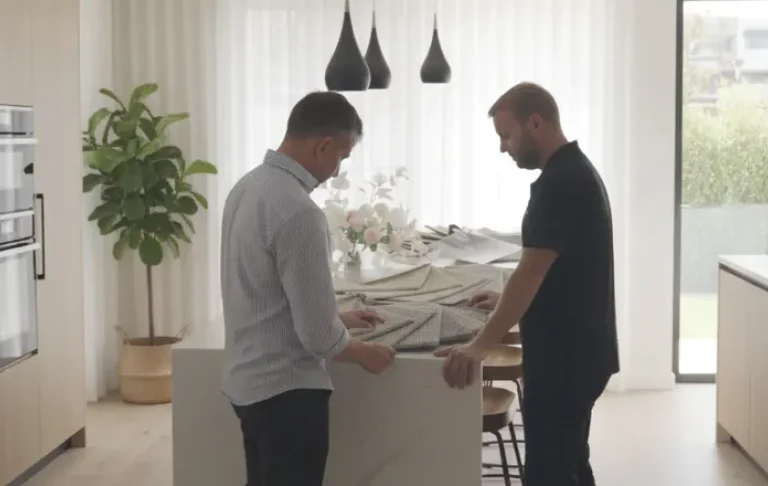
Market ranges set expectations, but your home sets the price. Our mobile showroom brings hybrid samples to your door, so you can compare ranges in your own space while your local flooring expert checks the details that decide the real number: the subfloor, the layout, what needs removing and how the edges finish. You leave the visit with a measured, itemised quote for your actual home, and no guesswork. Explore the hybrid range or book your free in-home measure and quote when you are ready.
All prices in this guide are recommended retail prices per square metre and exclude GST.