The short answer: blot up as much of the spill as you can with a dry white cloth, apply a mix of one teaspoon of dishwashing liquid in a cup of lukewarm water, blot from the outside in until the stain lifts, rinse with clean water and press dry. Act fast and never rub.
Every carpet cops a spill sooner or later. A knocked coffee, a muddy paw, a glass of red at the end of a long week. In busy Australian homes it is not a matter of if, but when. The good news is that most carpet stains come out completely when you act quickly and use the right method for the type of stain, usually with things you already have in the cupboard.
This guide covers carpet stain removal step by step, stain by stain, plus how to tackle old set-in marks, what changes depending on your carpet fibre, and the point where a professional clean becomes the smarter option. Quality carpet is designed to handle everyday life, and a little know-how keeps it looking that way for years.
The Four Golden Rules
Before you touch any stain, these four rules apply every single time:
- Act fast – the longer a spill sits, the deeper it soaks into the fibres and underlay. A stain treated in the first few minutes is far easier to remove than one treated the next day.
- Blot, never rub – press a clean white cloth or paper towel onto the stain and lift. Rubbing spreads the stain outwards and grinds it deeper into the pile, and it can permanently fuzz the fibres.
- Work from the outside in – start blotting at the edge of the stain and move towards the centre so you do not push it wider.
- Test first – try any cleaning solution on a hidden patch of carpet, such as inside a wardrobe, and check for colour change before using it on the stain.
A Homemade Carpet Stain Remover
You do not need a cupboard full of products. Most stains in this guide respond to one of these three mixes:
- Detergent solution – one teaspoon of mild dishwashing liquid stirred into one cup of lukewarm water. This is your first choice for most food and drink spills.
- Vinegar solution – one part white vinegar to two parts water. Useful for lifting residue, neutralising odours and tackling older marks on synthetic carpet.
- Bicarb soda – sprinkled dry, it absorbs grease and moisture and lifts odours. Leave it to sit, then vacuum it up.
Keep a stack of clean white cloths or paper towels on hand. Coloured cloths can transfer dye into damp carpet, which creates a brand new stain while you are removing the first one.
One more check before you start: your carpet manufacturer’s care guide lists the cleaning products it approves. Using something outside that list can void the warranty, so a quick look first protects both the carpet and the paperwork.
How To Remove A Fresh Carpet Stain
- Scoop up any solids with a spoon or blunt knife, then blot up as much liquid as you can with a dry white cloth.
- Apply a small amount of detergent solution to a cloth, not directly to the carpet, and blot the stain from the outside in.
- Keep blotting with fresh sections of cloth until no more colour transfers.
- Rinse by blotting with a cloth dampened in clean water, so no soapy residue is left to attract dirt later.
- Press dry towels onto the area to soak up moisture, then let it air dry. Place something heavy on a folded towel overnight for deeper spills.
That one method handles the majority of everyday accidents. The table gives you the fast version, and the sections below go deeper on each stain.
| Stain | First move | Treat with | Avoid |
|---|---|---|---|
| Coffee or tea | Blot dry | Detergent solution, then vinegar rinse | Rubbing |
| Red wine | Blot, then cold water | Detergent solution | Salt, hot water |
| Grease and oil | Bicarb soda for 15 minutes | Vacuum, then detergent solution | Scrubbing with water alone |
| Pet accidents | Blot thoroughly | Detergent, vinegar rinse, enzyme cleaner | Heat, which sets odours |
| Blood | Cold water blot | Cold detergent solution | Warm or hot water |
| Ink | Dab, never wipe | Methylated spirits on a cloth | Spreading outwards |
| Chewing gum | Freeze with ice | Snap off, treat residue | Pulling warm gum |
| Candle wax | Let it harden | Paper and gentle heat, then metho | Scrubbing soft wax |
| Old, set-in stains | Rehydrate with water | Vinegar solution or bicarb paste | Flooding the carpet |
Stain By Stain Removal Methods
How To Get Coffee And Tea Stains Out Of Carpet
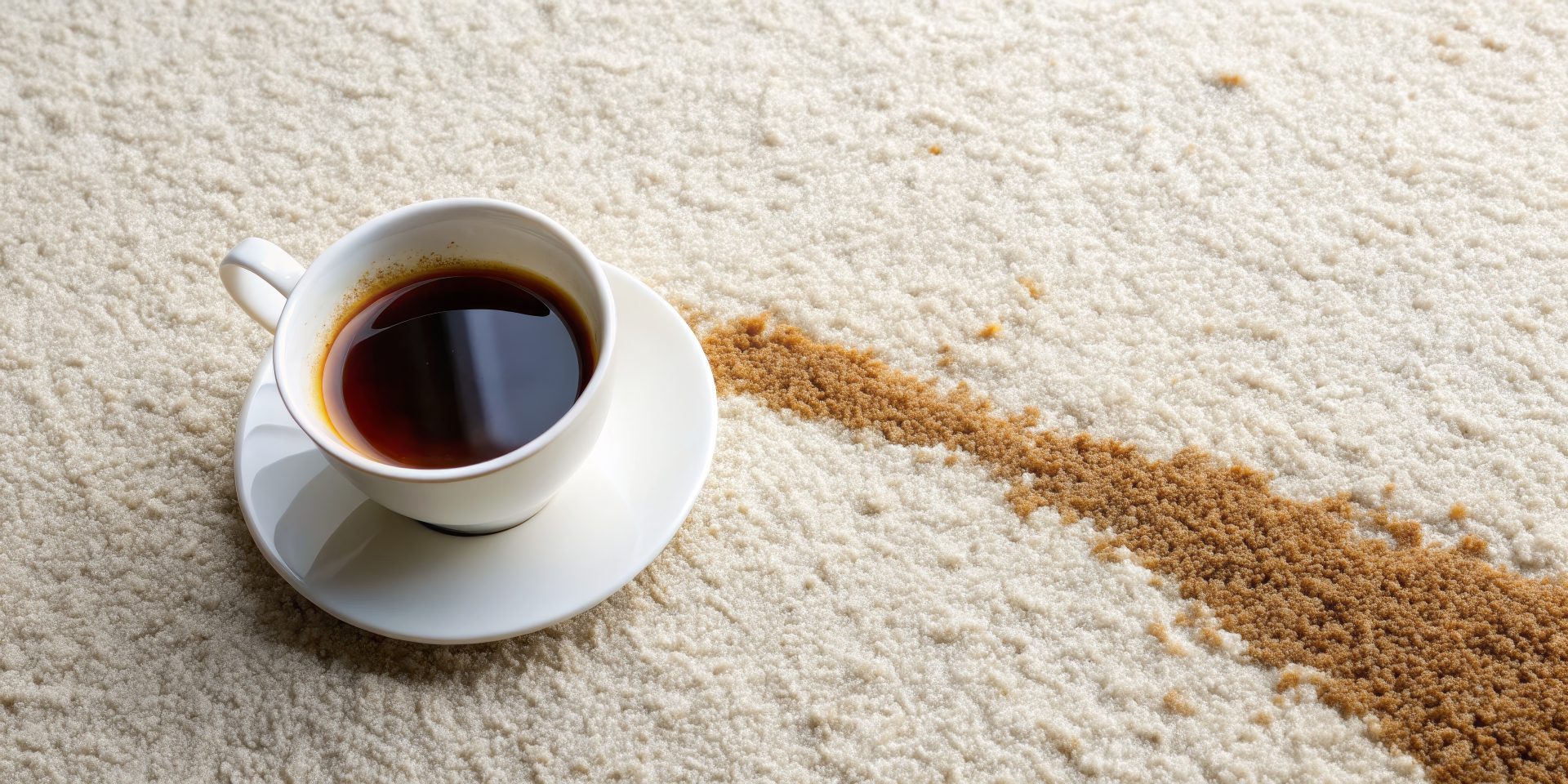
Blot immediately, then work in detergent solution. If a brown shadow remains once dry, follow up with the vinegar solution and rinse well.
How To Get Red Wine Out Of Carpet
Blot up as much as possible, then dampen with cold water and keep blotting. Never scrub, and skip the old salt trick on carpet, as salt can damage fibres and set the tannin. Finish with detergent solution and rinse.
Juice And Soft Drink
These are sugar stains. Detergent solution first, then a thorough rinse with clean water, because leftover sugar turns sticky and grabs dirt, leaving a dark patch weeks later.
How To Remove Grease And Oil Stains From Carpet
Cover the mark with bicarb soda or cornflour and leave it for fifteen minutes to absorb the oil, then vacuum. Follow with detergent solution. Oily marks do not dissolve in water alone, so the absorb-first step matters.
Chocolate
Let any solids harden, scrape gently, then treat with detergent solution using cold water. Warm water melts chocolate deeper into the pile.
Mud And Dirt
Resist the urge to wipe it while wet. Let mud dry completely, vacuum up the dried soil, then treat whatever mark remains with detergent solution.
How To Get Blood Out Of Carpet
Always cold water, never warm, as heat sets the protein permanently. Blot with cold water first, then cold detergent solution, working patiently.
Ink And Pen
Dab, do not wipe, with a cloth lightly dampened in methylated spirits, swapping to clean sections of cloth as the ink transfers. Rinse afterwards.
Chewing Gum
Harden it with ice cubes in a plastic bag, then snap and lift the brittle gum away before treating any residue.
Makeup And Lipstick
Scrape off any excess, then dab with methylated spirits followed by detergent solution.
Candle Wax
Let the wax set completely, then lay brown paper or a paper towel over it and press with an iron on its lowest setting, or warm it with a hairdryer, so the wax melts up into the paper. Repeat with fresh paper until it stops transferring, then dab any leftover colour with methylated spirits.
Nail Polish
Blot fresh polish gently without spreading it, then dab with a non-acetone polish remover on a white cloth, testing a hidden patch first. Acetone removers can damage carpet fibres and backing, so keep them away from the pile.
Vomit
Remove solids with a spoon, blot thoroughly, then clean with detergent solution and rinse. Follow with the vinegar solution to neutralise the smell, and once dry, a few hours under a layer of bicarb soda lifts anything that lingers.
How To Get Urine Out Of Carpet
Blot with dry towels until barely any moisture transfers, then follow the pet stain method below. Urine leaves crystals that ordinary cleaning can miss, which is why the smell sometimes returns on humid days, and it is exactly what enzyme cleaners are made for.
Curry And Turmeric
The hardest household stain of them all. Scrape away solids, blot gently with detergent solution and rinse, repeating patiently rather than scrubbing. Turmeric bonds with carpet fibres, so avoid any heat, and take comfort that natural light gradually fades the leftover yellow. For a large or deep curry stain, go straight to a professional.
How To Remove Pet Stains And Odours
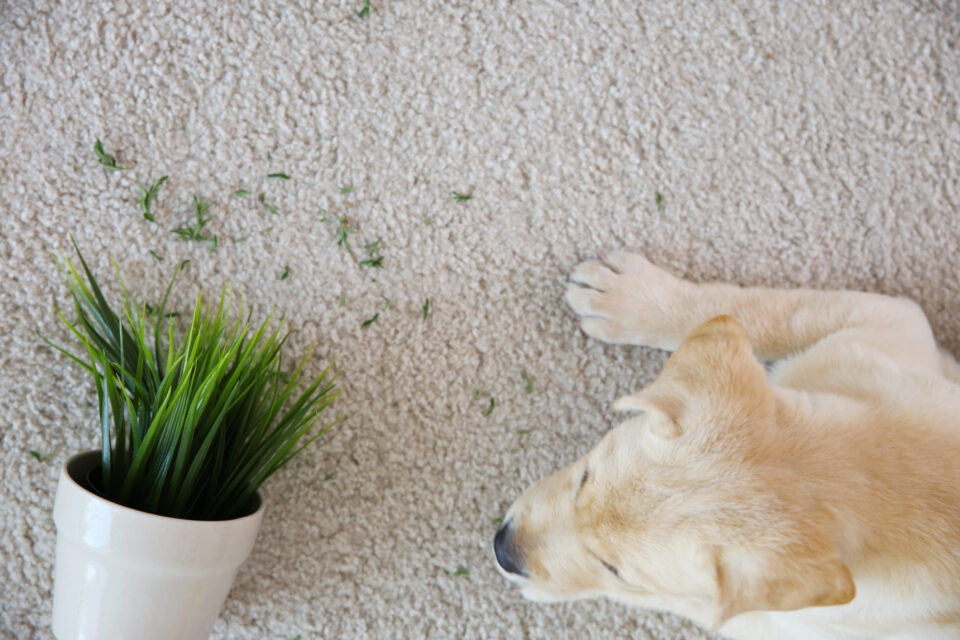
Pet accidents need speed for two reasons: the stain itself, and the moisture soaking through to the underlay where odours linger. Blot up as much as possible with dry towels, pressing firmly. Treat the area with detergent solution, rinse, then apply the vinegar solution to neutralise the odour. Once dry, a sprinkle of bicarb soda left for a few hours and vacuumed up lifts any remaining smell.
For accidents that keep announcing themselves, an enzyme-based carpet cleaner from the supermarket breaks down the proteins and urine crystals that ordinary cleaning leaves behind. Check your carpet manufacturer’s care guide before reaching for one, because cleaning with a product that is not approved can void the warranty.
If the smell keeps returning, the accident has likely reached the underlay, and that is a job for a professional clean. For households where accidents are part of life, our guide to the best carpet for pets covers fibres and treatments designed to shrug off exactly this.
Removing Old And Set-In Stains
Old stains take more patience than fresh ones, but many still come out:
- Rehydrate first – dried stains need moisture to release. Dampen the area with warm water (cold for anything protein based, like blood) and let it sit for ten minutes before treating.
- Use the vinegar solution – apply, leave for ten to fifteen minutes, then blot. Repeat rather than soak, as flooding the carpet pushes the stain into the underlay.
- Try a bicarb paste – mix bicarb soda with a little water, work it gently into the stain, let it dry completely and vacuum. This works well on greasy or smelly older marks.
- Escalate carefully with hydrogen peroxide – for a stubborn mark on light-coloured synthetic carpet, 3% hydrogen peroxide from the chemist can lift what gentler methods leave behind. Test a hidden patch first, keep it well away from wool, and confirm it against your manufacturer’s care guide, as unapproved products can void the warranty.
- Know when it is not a stain – if the mark stays after several attempts, the fibres themselves may be bleached or dye-damaged rather than dirty. No amount of cleaning changes that, but patch repairs or professional dyeing sometimes can.
Does Carpet Fibre Change The Method?
It does, and it is worth knowing what is under your feet:
- Wool – beautifully resilient but more sensitive to chemistry. Stick to mild detergent solutions, use vinegar sparingly, avoid anything strongly alkaline like undiluted bicarb pastes, and never scrub. Blot gently and be patient. A reliable wool-safe mix is one teaspoon of wool detergent and one teaspoon of white vinegar in a litre of warm water.
- Nylon and triexta – the workhorses of family carpet. Both handle the full range of methods in this guide, and many modern ranges include built-in stain protection that keeps spills sitting on the surface longer.
- Polyester – naturally stain resistant to water-based spills, though oily stains hold on harder, so lean on the bicarb absorb-first method.
If you are not sure what fibre your carpet is, check the invoice or a spare offcut, or ask a flooring expert. Our carpet buying guide explains the fibre types in more detail.
When To Call A Professional
Some jobs are worth handing over:
- Large or repeated stains – anything bigger than a dinner plate is hard to treat evenly by hand.
- Odours that keep returning – usually a sign the spill reached the underlay.
- Water damage – carpets that have been properly wet need professional drying to prevent mould.
- Delicate fibres – wool and older carpets respond best to professional equipment and know-how.
A professional clean every twelve to eighteen months also lifts the ground-in soil that regular vacuuming misses, and many carpet warranties expect it.
Preventing The Next Stain
A few small habits go a long way: vacuum regularly so grit does not grind into the pile, deal with spills the moment they happen, use mats at entries and rugs in high-traffic spots, and keep a small stain kit (white cloths, dishwashing liquid, white vinegar, bicarb) somewhere easy to grab. Our guide on keeping carpet looking new has more simple habits that stretch the life of your carpet.
Frequently Asked Questions
- Why does a carpet stain come back after cleaning? – this is called wicking. Moisture deep in the pile carries leftover residue back to the surface as the carpet dries. Blot the area again with clean water, then press dry towels under a weight overnight to draw the moisture up into the towel instead of the carpet.
- Is vinegar safe on carpet? – diluted white vinegar is safe on most synthetic carpets and helpful for odours and older marks. On wool, use it sparingly and always test on a hidden spot first.
- Can old stains ever be fully removed? – often, yes, with rehydration and repeat treatments. If the fibre itself has been bleached or dyed by the spill, cleaning cannot reverse it, but a professional can advise on patching.
- Are supermarket carpet stain removers worth it? – good ones work well when you follow the directions, especially on fresh spills. Always test first, rinse thoroughly afterwards, and avoid anything containing bleach unless the label confirms it is carpet safe.
- Should I hire a carpet cleaning machine? – for a single stain, no, the methods above do the job. For a whole room refresh they can help, just go easy on the water. Overwetting is the most common mistake and can leave carpet damp for days.
When Cleaning Is Not Enough
Every carpet has a lifespan, and there comes a point where stains, wear and flattened pile tell you it is time rather than another round of cleaning. Our guide on how long carpet lasts helps you read the signs.
If new carpet is on the horizon, seeing samples in your own home makes the decision far easier. Our mobile showroom brings a wide range of carpet styles, colours and stain-resistant options to your door, so you can compare them in your own lighting, in the exact rooms they will live in. Book a free in-home measure and quote whenever you are ready, and in the meantime, keep that stain kit handy.