SPC stands for Stone Plastic Composite, the rigid core at the heart of most modern hybrid flooring. Limestone and stabilisers are compressed into a dense board that is waterproof, has good dimensional stability through temperature swings, and feels reassuringly solid underfoot.
If you have been researching new floors, SPC is the acronym that keeps appearing, usually alongside hybrid flooring. The two are closely related: hybrid is the product you walk on, and SPC is the core technology inside most of it. This guide explains what SPC actually is, how the planks are built, and where it makes sense in an Australian home.
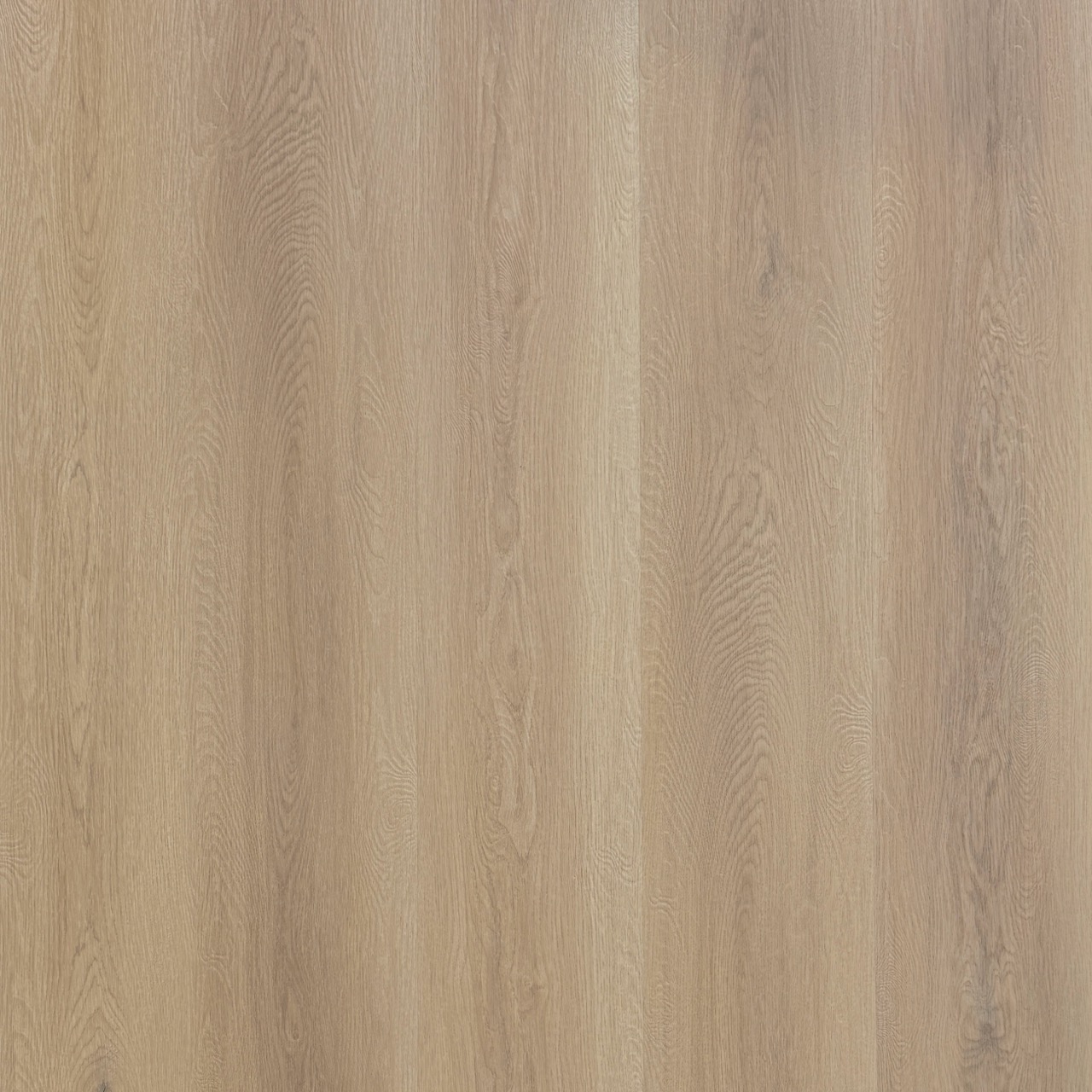

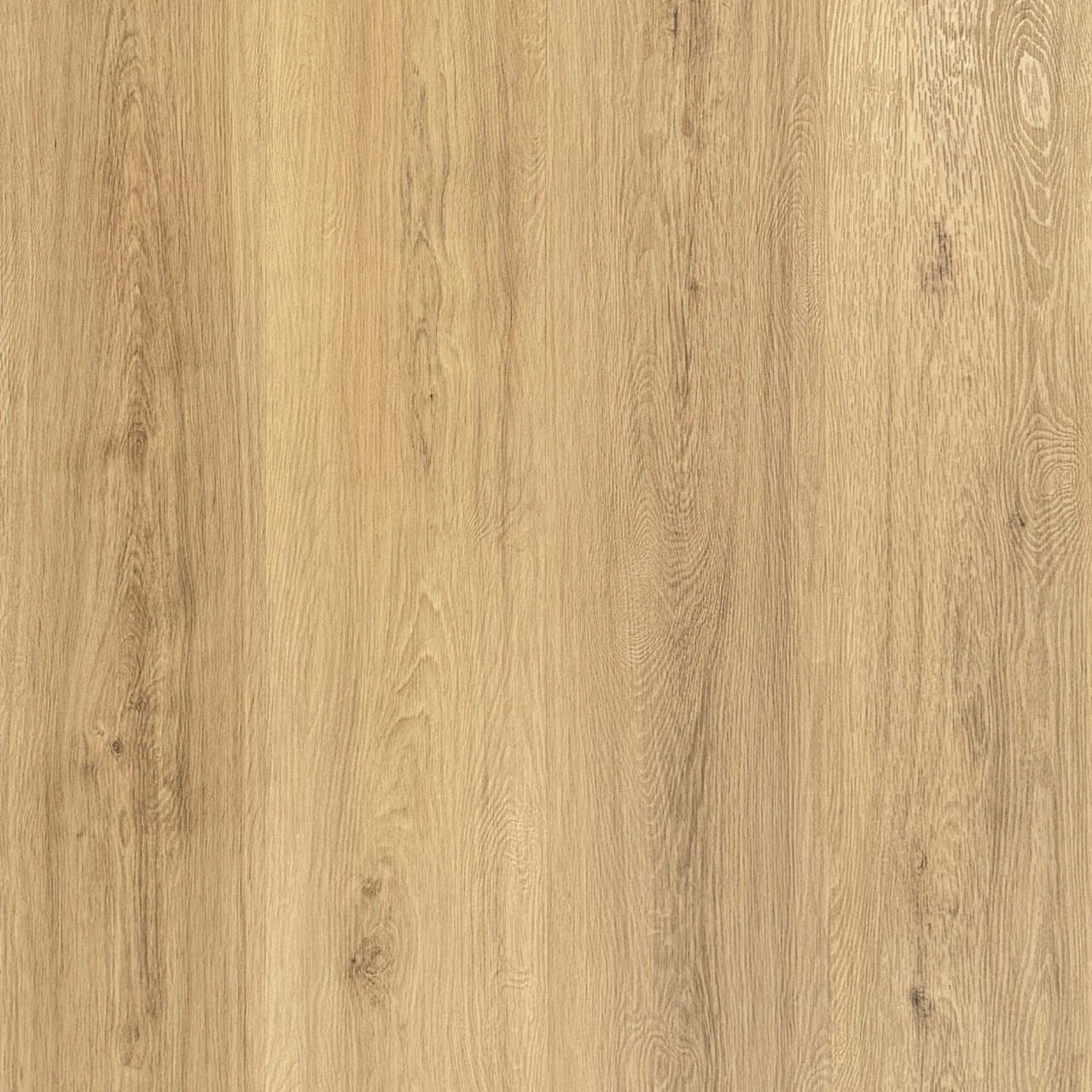
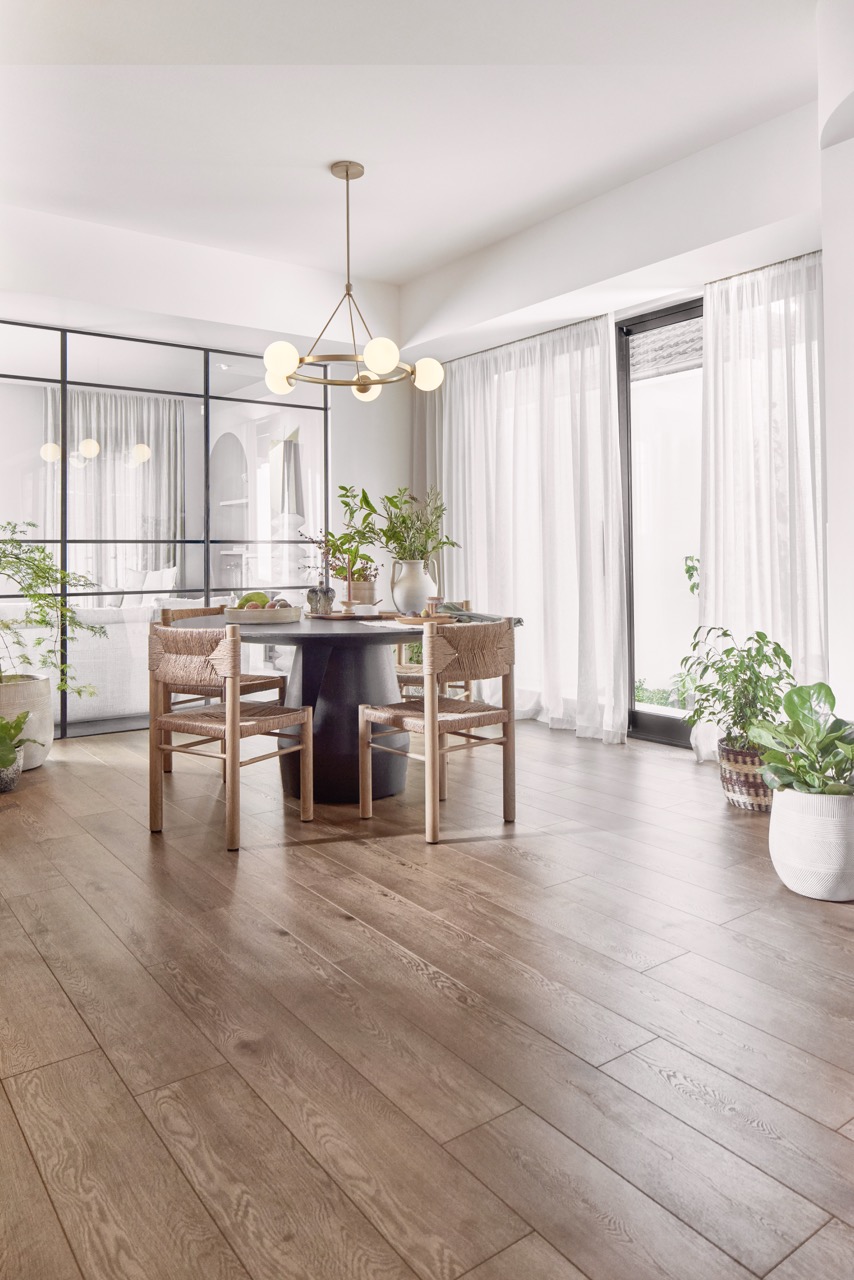
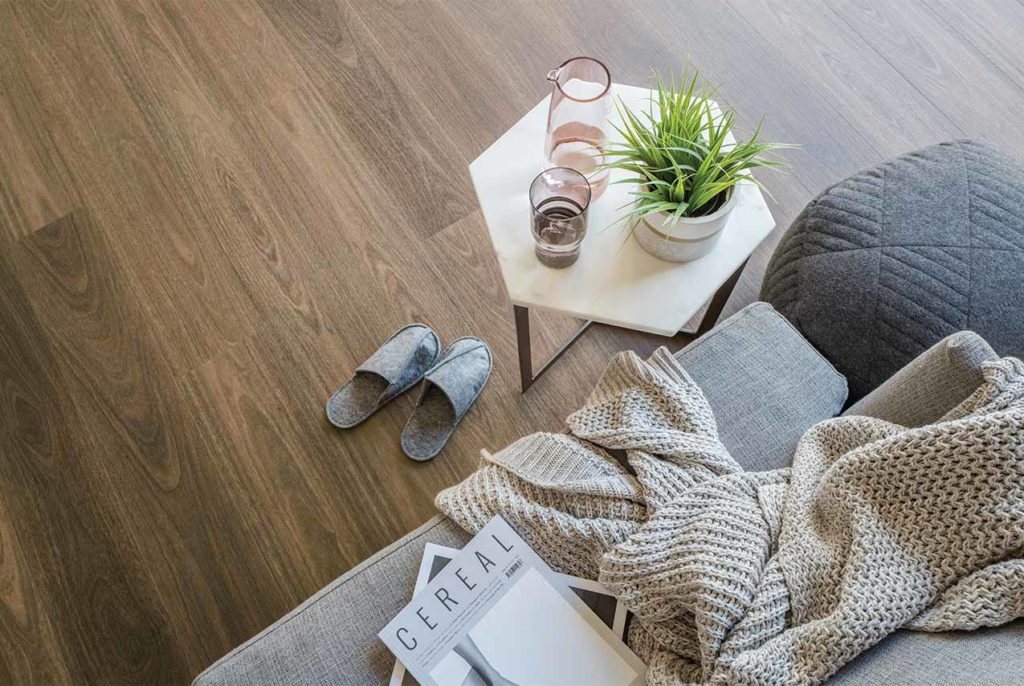
Featured above: selected colours from our Alpine hybrid flooring range, built on an SPC core.
What Does SPC Stand For?
Stone Plastic Composite, sometimes written as Stone Polymer Composite. Both describe the same thing: a core board made predominantly from limestone powder (calcium carbonate) bound with polymer and stabilisers. The result is dense, rigid and completely unbothered by water, which is what separates it from timber-based boards.
How An SPC Plank Is Built
- Wear layer – a clear protective coating that handles scratches, scuffs and daily traffic. Thickness is one useful guide, but it works alongside the surface coating, joint strength and core quality, so compare full specifications rather than a single number.
- Decor layer – the printed timber or stone visual, now realistic enough that guests rarely pick the difference.
- SPC core – the limestone composite board that gives the plank its stability, waterproofing and solid feel.
- Acoustic backing – most quality ranges attach an underlay pad that softens sound and footfall.
Why SPC Flooring Suits Australian Homes
- Waterproof core – the core itself cannot swell, so everyday spills and wet feet are no drama. For bathrooms and laundries, suitability depends on the specific product, its installation system and the manufacturer’s requirements, and building requirements vary between states and territories.
- Stable in heat – Australian summers move timber and laminate more than most flooring owners expect. SPC’s dense, rigid core has good dimensional stability through temperature swings, though movement allowances still vary by product, so follow the manufacturer’s specification.
- Solid underfoot – the density gives a firm, quality feel closer to timber than to older floating floors.
- Quiet and comfortable – attached acoustic backing keeps footsteps and echo down.
- Practical to live with – no waxing or sanding, just sweeping and an occasional damp mop.
Is SPC Flooring Waterproof?
The core itself is impervious, so spills, wet feet and pet bowls are everyday events rather than emergencies. Two sensible caveats: waterproof planks do not seal the floor beneath them, so standing water should still be wiped up rather than left, and any flooding dealt with promptly for the subfloor’s sake. And a waterproof plank is not automatically approved for wet areas like bathrooms and laundries. That depends on the specific product, its installation system and the manufacturer’s requirements, so check the instructions and, if needed, your local authority or certifier.
SPC Flooring Compared With Other Floors
- SPC vs laminate – laminate’s timber-based core swells if water gets in, while SPC shrugs it off. Laminate counters with strong scratch and abrasion resistance, depending on its classification and surface construction, often at lower prices. Our hybrid vs laminate guide compares them room by room.
- SPC vs WPC – WPC uses a wood-polymer core that feels slightly softer but gives up some density and stability. Most hybrid flooring sold in Australia is SPC. The differences are covered in our SPC vs WPC guide.
- SPC vs traditional vinyl planks – glue-down vinyl is thinner and follows the subfloor’s imperfections; SPC’s rigid core bridges minor dips and clicks together as a floating floor.
Where To Use SPC Flooring In The Home
SPC handles most of the home, which is much of its appeal: one consistent look flowing through living areas, kitchens, hallways and bedrooms. Keep in mind that most floating SPC floors still need small perimeter and transition allowances so the floor can move naturally, though some specialised SPC products, including ranges we carry, are designed for reduced allowances. For wet areas like bathrooms and laundries, check the specific product’s requirements before you plan them in. Its stability also suits rooms with big windows and strong sun.
Frequently Asked Questions
- Is SPC flooring any good? – for most Australian households, yes. It has a waterproof core, good stability, and is quiet and easy to care for. The main trade-off is that it is a printed visual rather than real timber, which matters to some homeowners and not at all to others.
- Is SPC the same as hybrid flooring? – almost. Hybrid is the product category; SPC is the core technology inside most hybrid planks. When a retailer says hybrid, they usually mean an SPC-core plank.
- What thickness should I look for? – most quality SPC ranges run 5.5mm to 8mm overall. Total thickness is only part of the picture though: the wear layer, surface coating, joint strength and core quality all matter, so compare full specifications rather than a single number.
- Can SPC go over underfloor heating? – many ranges are rated for it within set temperature limits. Check the specification for the range you choose before installation.
- Does SPC need underlay? – usually not. Quality ranges come with acoustic backing attached, and adding extra underlay outside the manufacturer’s specification can void the warranty.
A Quick Note On Requirements
Installation methods and requirements vary between states and territories, and between products. Always follow the manufacturer’s installation instructions for the range you choose. If you are unsure, confirm requirements with your local authority, certifier or governing body, which in Queensland is the QBCC.
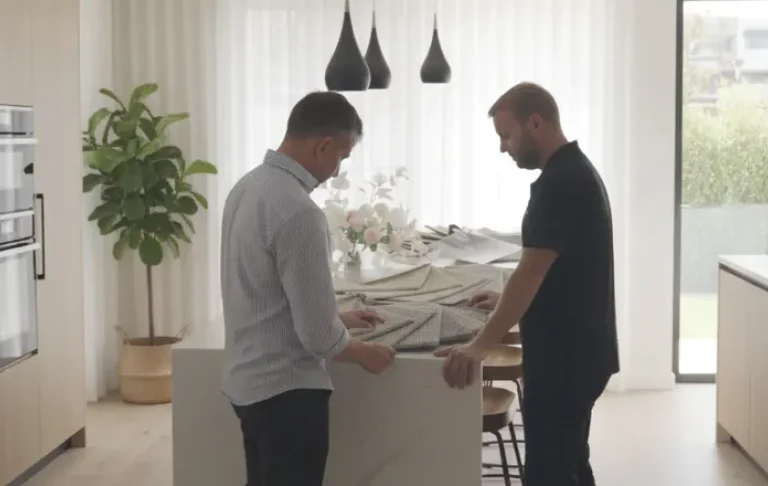
Seeing SPC Flooring In Your Own Home
Printed visuals vary enormously between ranges, and the difference shows in your lighting, not the showroom’s. Our mobile showroom brings our hybrid flooring range to your door, so you can stand the planks up against your walls and cabinetry, feel the core density and surface texture for yourself, and get straight answers on wear layers and specifications while a professional measure happens in the same visit. Book a free in-home measure and quote when you are ready to compare.