By Team Beare. Updated October 2026.
When homeowners are choosing new flooring, underlay rarely gets the attention it deserves. Most of the conversation centres on the flooring itself, the colour, the product type, the price. But the underlay beneath the floor plays a more significant role in how that floor looks, sounds and feels day to day than many people realise.
Understanding what underlay does, which types suit different floors and why quality matters helps you make a better overall decision when planning any flooring project.
What Underlay Actually Does
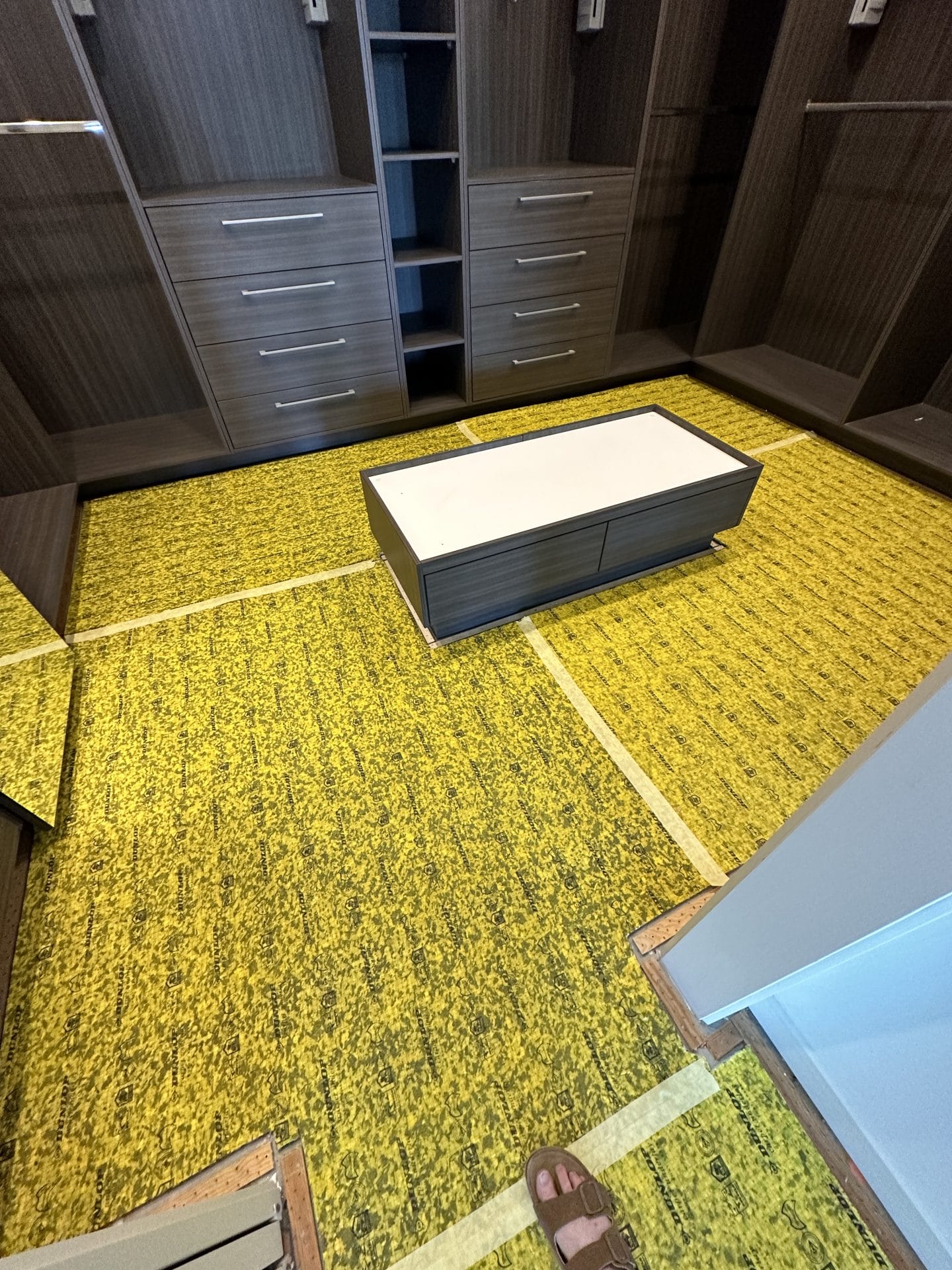
Underlay sits between your subfloor and your finished flooring. It performs several functions at once, and getting it right affects the comfort and performance of the floor above it for the life of the installation.
- Acoustic dampening. Underlay absorbs and reduces the sound of footsteps travelling through the floor, both within the room and into spaces below. This is particularly important in two-storey homes and rooms above living areas, where footstep impact sound is most noticeable.
- Thermal insulation. Underlay slows the transfer of cold from a concrete subfloor to the room above. This makes a practical difference to underfoot comfort in cooler months, especially in homes built on slab foundations.
- Moisture management. Many underlay products include a built-in moisture barrier, which is important over concrete subfloors where moisture vapour can move upward and affect the flooring above over time.
- Support for the flooring system. The right underlay supports the floor to the manufacturer’s specification. It cannot correct a subfloor that falls outside the permitted flatness tolerance.
Types of Underlay
Several materials are used in flooring underlay, each with its own characteristics.
- Foam underlay is lightweight and used beneath some floating floors where the product instructions permit it. It provides basic acoustic and thermal performance and comes in a range of thicknesses and densities.
- Felt underlay is denser than foam and offers good acoustic performance. It holds its shape well over the life of the installation and feels more stable underfoot.
- Rubber underlay provides strong acoustic and thermal performance, making it a common choice in multi-storey buildings and higher-specification applications. It delivers meaningful improvements in impact sound reduction.
- Combination products bring foam or felt together with a built-in moisture barrier in a single product, which simplifies installation over concrete subfloors.
Some flooring products come with underlay pre-attached to the plank, and manufacturer guidelines determine whether additional underlay is appropriate.
Thickness and Density
Thicker underlay is not always the better choice. Floating floor systems need a stable, firm platform, and underlay that is too thick or too soft can cause movement in locking joints and affect surface stability. Manufacturer guidelines specify the appropriate underlay for each product, including maximum thickness allowances. Installing outside those specifications can affect performance and may affect the product warranty.
Underlay and Acoustic Requirements
In apartments and multi-storey buildings, body corporates often specify a minimum acoustic performance rating for flooring installations. Underlay contributes significantly to that rating, and the flooring product and underlay together determine the final result. If you are installing in a unit or townhouse, check what acoustic requirements apply before choosing your underlay.
Underlay for Different Flooring Types
- Laminate flooring generally requires underlay for acoustic and comfort reasons. Many laminate products do not come with underlay pre-attached and benefit from a quality foam or felt product. Follow the manufacturer’s guidance on thickness and specification. Explore our laminate range for available products.
- Hybrid flooring requirements vary between products. Some hybrid ranges include underlay pre-attached to the plank; others require it separately. Always check the specific product guide. See our hybrid flooring range.
- Engineered timber installed as a floating floor typically requires underlay. Products installed by direct stick have different requirements.
- Carpet sits on underlay as part of the standard installation. Underlay density and thickness affects how the carpet feels and how long it lasts.
What To Look For
- Match the underlay to the flooring product being installed and follow the manufacturer’s guidance on type and thickness.
- For concrete subfloors, check the manufacturer’s requirements for moisture testing and vapour control before choosing an underlay.
- In apartments or townhouses, check body corporate acoustic requirements before purchasing.
Getting underlay right from the start pays dividends in how the floor feels, sounds and performs over time.
Installation methods and wet-area requirements vary by state and territory. Follow the selected product’s installation instructions and confirm applicable building requirements with your installer and local authority or certifier.
Frequently Asked Questions
-
Do I need underlay under laminate flooring? Most laminate flooring requires underlay. It improves comfort, reduces sound and helps the floor sit evenly. Some laminate products come with underlay pre-attached; others require it separately. Check the product specifications before purchasing.
-
Can I use the same underlay under different flooring types? Not always. Different products have different underlay requirements, including thickness limits and moisture barrier specifications. Always follow the specific manufacturer’s guidelines for the product being installed.
-
Does underlay make a big difference to sound? Yes, significantly. The right underlay reduces footstep noise within the room and the impact sound that travels to spaces below. This difference is most noticeable in two-storey homes or rooms above living areas.
-
Is a thicker underlay always better? Not necessarily. Floating floors need a firm, stable base. Underlay that is too thick or too soft can affect locking joints and surface stability over time. Follow the manufacturer’s recommended thickness range for your specific flooring product.
Underlay is one of the most practical decisions in a flooring project, and easy to overlook until the floor is down. Explore our flooring ranges to see what is available, or read our guide to flooring for Australian homes.