By Team Beare. Updated August 2026.
Engineered timber flooring and solid timber flooring both give you a genuine hardwood surface, but they behave very differently underneath. Engineered boards use a real timber wear layer bonded to a stable plywood core, which makes them far less prone to expanding, shrinking and cupping in Australian conditions. Solid timber is one piece of hardwood all the way through, which means it can be sanded back many more times over its life but demands more from your subfloor, your installer and your climate.
What Is The Difference Between Engineered And Solid Timber?
The difference is construction. A solid timber board is milled from a single piece of hardwood, typically 19mm thick, with the species running top to bottom. An engineered board is built in layers: a hardwood wear layer on top, usually between 2mm and 6mm thick, bonded to a multi-ply or timber core that resists movement.
That layered construction is not a shortcut or a lesser product. It is the same approach used in structural plywood and laminated beams, applied to flooring: put the beautiful, expensive hardwood where feet and eyes meet it, and put engineered stability underneath where it does the most good.
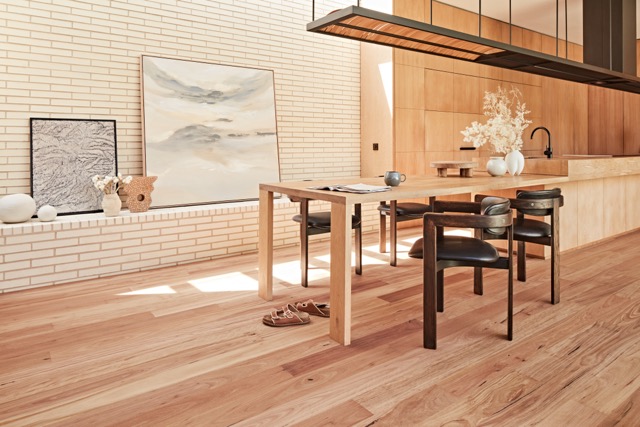
From above, a quality engineered floor and a solid floor are effectively identical. The surface is the same real timber, with the same grain, the same colour variation and the same feel underfoot. The distinction only shows at the edge of the board, and in how each floor behaves over the years. We cover the layer-by-layer detail in our guide to what engineered timber flooring is.
Which Is More Stable In Australian Conditions?
Engineered timber is the more stable of the two, and it is not close. Timber moves as humidity rises and falls. In a solid board, that movement runs across the full width and depth of the plank, which is why solid floors can gap in dry winters and cup or peak in humid summers. The cross-laminated core of an engineered board counteracts most of that movement because each layer restrains the one above it.
That stability matters in Australia more than in most countries. Coastal humidity, hot dry inland air, reverse-cycle air conditioning and slab-on-ground construction all push timber around. Some points worth knowing:
- Humidity swings – engineered boards move a fraction as much as solid boards when the weather changes, so seasonal gapping is far less visible.
- Air conditioning – constant heating and cooling dries timber out. Engineered cores tolerate this better than solid planks.
- Wide boards – the wider the board, the more movement matters. This is why wide-plank floors are almost always engineered.
- Neither is waterproof – stability against humidity is not the same as tolerance of standing water. Both floors need spills wiped up promptly, and neither belongs in a wet area.
Can Both Be Sanded And Refinished?
Yes, and this is the strongest genuine argument for solid timber. A 19mm solid board has roughly 6mm of usable timber above the tongue, which means it can typically be sanded and recoated several times across many decades. A well-kept solid floor can outlive the house around it.
Engineered timber can also be sanded, but the limit is the wear layer. A 6mm wear layer supports a similar number of sands to solid timber in practice. A 2mm wear layer supports one careful sand, sometimes none, and is better treated as a recoat-only floor. This is an honest limitation and it is the main trade-off you accept in exchange for stability.
Two things soften it. First, most families never sand a floor even once; modern coatings are hard-wearing and a recoat refreshes the surface without removing timber. Second, wear layer thickness is a choice you make at purchase, so if long-term sanding matters to you, buy a thicker wear layer and the gap to solid timber narrows considerably.
What About Board Widths And Looks?
Engineered construction opened up looks that solid timber struggles to deliver. Because the core keeps wide boards flat, engineered ranges commonly run 190mm and wider, giving rooms the broad, calm plank look that suits modern Australian homes. Solid timber is usually kept narrower to control movement.
Pattern work tells the same story. Parquetry patterns rely on short boards sitting flat against each other in changing grain directions, which is exactly where engineered stability earns its keep. If you love the look, our herringbone and chevron range is engineered for precisely this reason. Both floor types take the same species, grades and finishes on the surface, so colour and character are a level playing field.
How Are They Installed?
Installation is where the practical gap widens for most projects:
- Solid timber – traditionally nailed to bearers, joists or a plywood substrate, then sanded and coated on site. It arrives raw, so the finishing happens in your home, with the time and odour that involves.
- Engineered timber – usually supplied prefinished and either glued directly to the slab or floated over an underlay. There is no on-site sanding or coating, so rooms are back in use quickly.
- Subfloor preparation – both need a sound, dry, level subfloor, but solid timber over concrete generally requires a substrate layer first, adding height and work. Engineered boards sit happily on a properly prepared slab.
- Acclimatisation – both products should rest on site before installation so the boards adjust to the home, and moisture testing of the slab is standard good practice.
Because engineered boards suit direct-stick and floating methods, they are the practical answer for apartments, slab-on-ground homes and renovations where floor height is tight.
How Long Does Each Floor Last?
Solid timber holds the longevity crown on paper. Sanded and recoated on schedule, a solid hardwood floor can serve for generations, and old solid floors are often restored rather than replaced.
A quality engineered floor is not far behind in real life. With a decent wear layer, sensible care and a recoat when the finish dulls, decades of service is a reasonable expectation. The floors that give engineered timber a bad name are usually thin-wear-layer products with soft cores, which is a quality problem rather than a category problem. Buying from an established range with a genuine hardwood wear layer is the safeguard.
How Do You Care For Each Floor?
Day to day, the two floors are cared for identically, because the surface is the same material. A soft broom or vacuum keeps grit off the finish, and an occasional damp, well-wrung mop handles the rest. Neither floor should ever be wet-washed or steam-mopped, and both appreciate felt pads under furniture and a mat at each entry to catch the grit that does the slow, invisible damage.
The long-term care story differs. When a solid floor’s finish tires, the default response is a full sand and recoat, which is disruptive but essentially limitless. An engineered floor is more often refreshed with a recoat, which removes no timber, keeps the wear layer in reserve and gets the room back in use quickly. Both floors respond to sun, so window furnishings on harsh western glass protect either one, and both prefer a home that is ventilated reasonably rather than sealed up for months. In short, nothing about ownership should sway your decision either way; the differences that matter are all decided before the floor goes in.
Which One Should You Choose?
Both are real timber, so this comes down to your home and your priorities:
- Choose engineered timber if – you are installing over a concrete slab, live in a coastal or humid area, want wide boards or herringbone, need the floor finished and walkable quickly, or want real timber in an apartment.
- Choose solid timber if – you are restoring a period home with existing solid floors, have a timber subfloor ready to nail into, and value the ability to sand the floor back many times over a very long ownership horizon.
- Either works if – your priority is simply the look and feel of hardwood in living areas, hallways and bedrooms. Match the species and finish you love, then let the construction suit the building.
Our own timber flooring range is engineered, and that is a deliberate choice rather than a compromise. For most modern Australian homes, engineered construction is the practical way to own real timber: stable on a slab, prefinished, and available in the wide boards and patterns people actually want. Solid timber remains a fine floor, and if you own one, it is worth looking after.
Installation methods and requirements vary by state and territory. Always follow the manufacturer’s installation instructions, and confirm any building requirements with your local authority or certifier, such as the QBCC in Queensland.
See Engineered Timber In Your Own Home
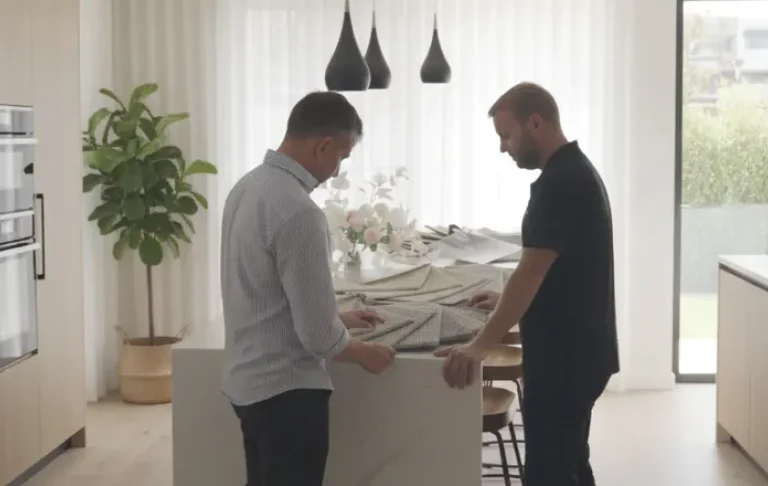
Colours behave differently in your light than they do in photographs. Our mobile showroom brings full-size engineered timber samples to you, so you can compare boards in the rooms they will actually live in. Book a free in-home measure and quote and we will help you weigh up species, wear layers and finishes without any pressure.
Frequently Asked Questions
- Is engineered timber flooring real wood? – Yes. The surface you walk on is genuine hardwood, the same species and grade used in solid boards. Only the layers beneath differ, where a plywood core replaces solid timber to improve stability. Once installed, the two are visually indistinguishable from above.
- Does solid timber add more value to a home than engineered? – Not in any reliable way. Buyers respond to the look, condition and feel of a real timber floor, and a quality engineered floor delivers all three. A worn solid floor impresses nobody, while a well-kept engineered floor reads simply as beautiful hardwood.
- How many times can engineered timber be sanded? – It depends entirely on the wear layer. Boards with a thin wear layer around 2mm suit recoating rather than sanding, while thicker wear layers of 4mm to 6mm can typically handle multiple careful sands over the life of the floor. Ask about wear layer thickness before you buy.
- Can solid timber be installed over a concrete slab? – It can, but it normally needs a plywood substrate or batten system fixed to the slab first, which adds height, cost and time. Engineered timber is designed for slab installation and can be glued directly or floated over an underlay, which is why it dominates slab-on-ground and apartment projects.
- Which handles Queensland humidity better? – Engineered timber. Its cross-layered core restrains the natural swelling and shrinking that humidity causes in timber, so seasonal movement is much smaller than in solid boards. It still is not waterproof, and no timber floor suits wet areas, but for humid coastal climates engineered construction is the safer choice.
- Is engineered timber cheaper than solid timber? – Usually the installed cost favours engineered timber, because it arrives prefinished and skips the on-site sanding, coating and substrate work solid timber often needs. Prices vary widely with species, wear layer and board width, so compare complete installed quotes rather than board prices alone. Our engineered timber cost guide sets out the typical ranges.