By Team Beare. Updated October 2026.
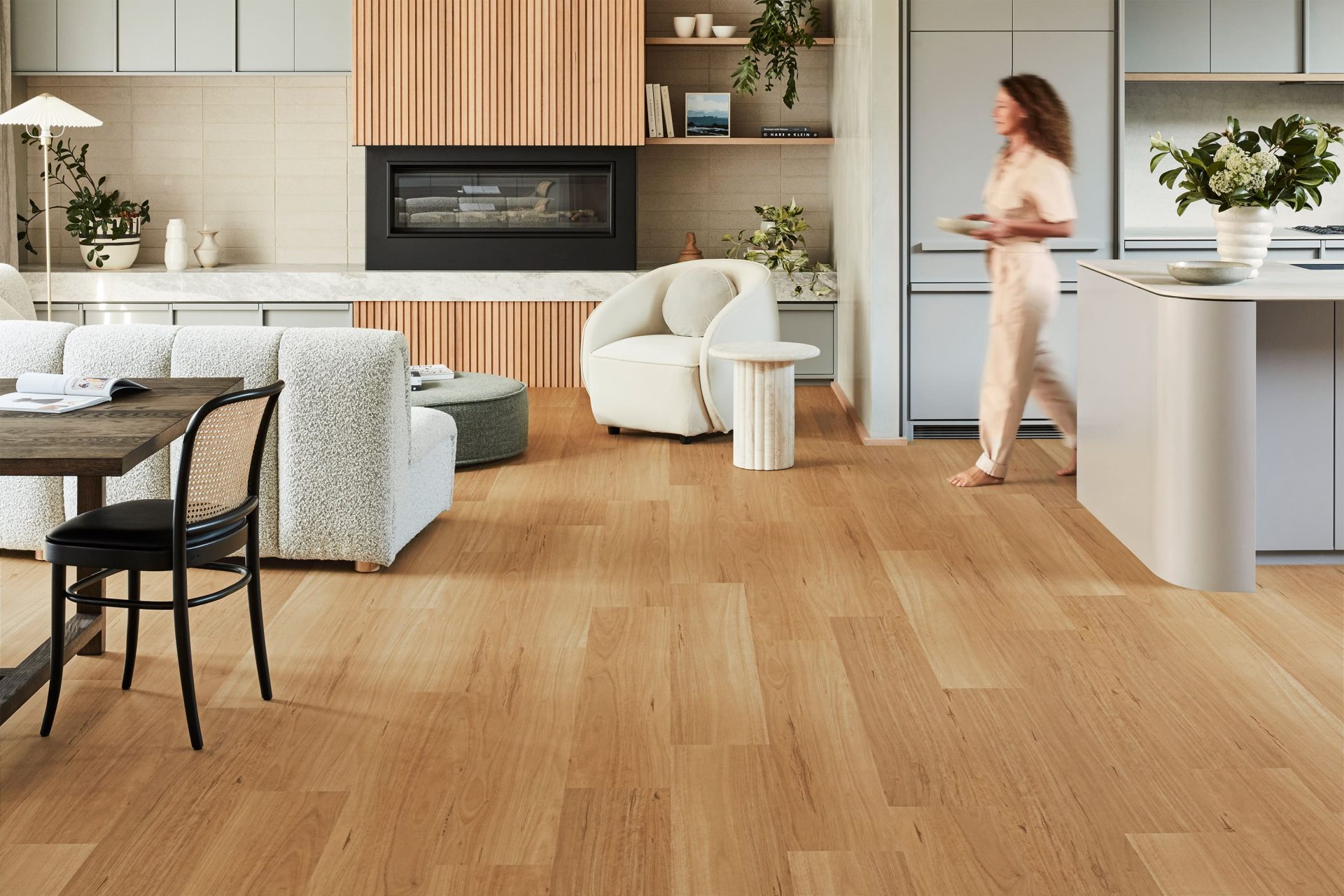
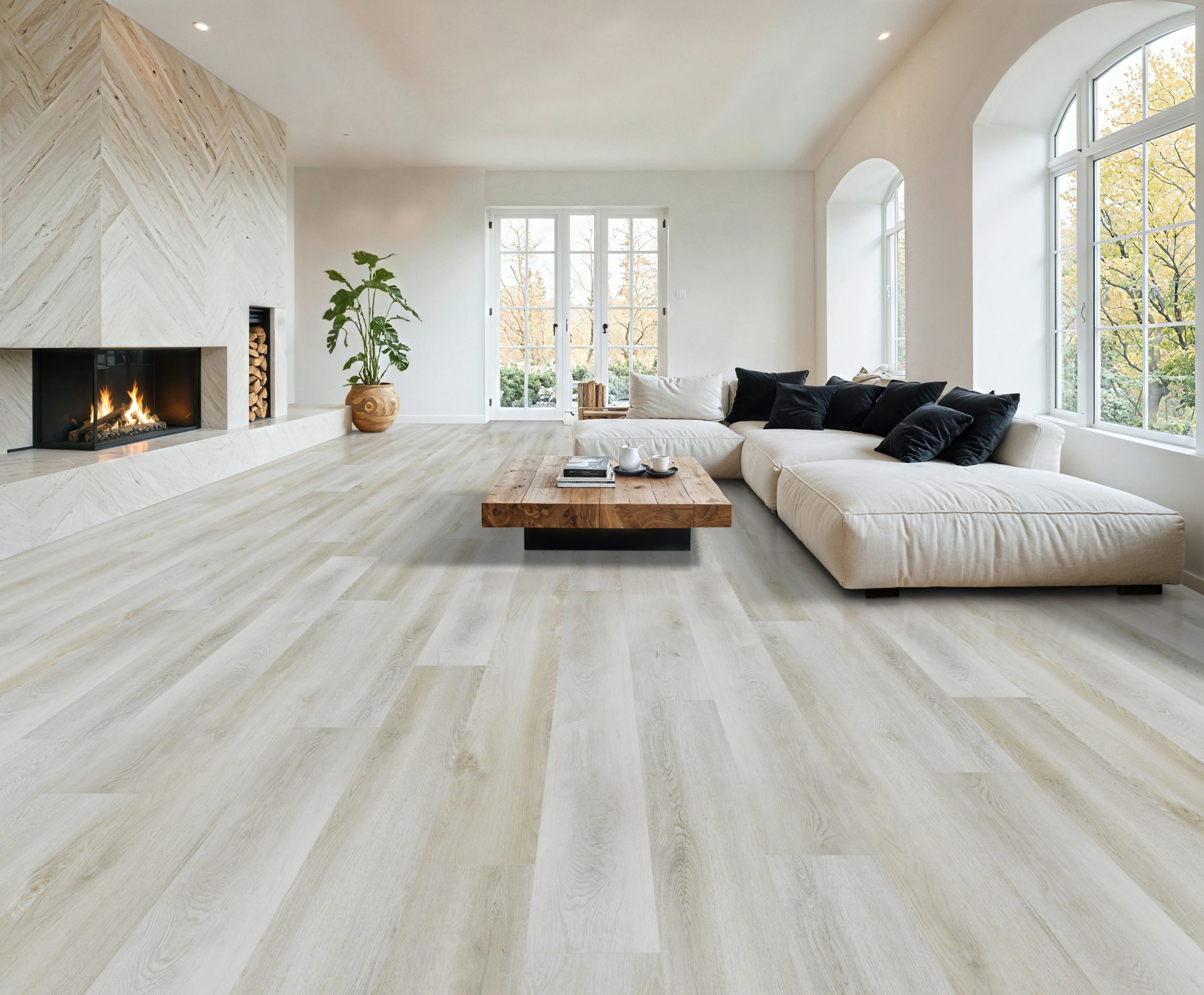
Hybrid flooring and vinyl planking both come in timber-look finishes, but their construction and installation methods differ by product. Hybrid often uses a floating click system; vinyl may be glued down or use a click system. On paper they look like the same product. The difference comes down to how each is constructed, and that difference shapes how the floor feels and performs in your home.
Both products suit Australian conditions well, and both are solid choices in the right application. Understanding what sets them apart makes it easier to decide which belongs in your home.
What Hybrid Flooring Is
Hybrid flooring is built around a rigid core layer, typically made from stone polymer composite (SPC). This rigid core is what gives the floor its stability, its firm underfoot feel, and its resistance to the expansion and contraction that temperature and humidity cause in more flexible flooring types.
The planks are thicker than vinyl plank. The hybrid flooring range at Beare runs to 7mm across options including Alpine and Australian Outback. Many hybrid products include a pre-attached underlay layer, which contributes to the underfoot comfort and acoustic performance of the finished floor.
Hybrid flooring carries waterproof or water-resistant performance, making it a practical consideration for kitchens, living areas, laundries, and the busy zones of family homes.
What Vinyl Plank Is
Vinyl planking is available in different constructions. Some products are flexible and designed for glue-down installation, while others have a rigid core or use a click system. Check the construction and installation method of the specific range.
The vinyl planking range at Beare includes products from 2.5mm through to 4.5mm thick. Response and Mesmerized sit at the thinner end of the range, while Highland steps up to 4.5mm and offers a noticeably firmer result underfoot compared with thinner LVP options.
Many vinyl planks resist moisture and carries realistic timber-look surfaces. It is a practical choice where durability and water resistance are both important and a lower total cost suits the project.
How They Perform Differently
The rigid core in hybrid flooring creates a noticeably more solid feel underfoot. Flexible vinyl and rigid-core hybrid can feel different underfoot, but both rely on a subfloor prepared to the product requirements.
Acoustic performance depends on the complete installed system, including the product, any permitted underlay and the subfloor. Compare tested system ratings rather than relying on plank thickness alone. As a guide, most hybrid ranges carry a 4 to 5 star acoustic rating.
Both products require a well-prepared subfloor, with slightly different priorities: rigid hybrid planks need a flat base (as a guide, around 3mm over a 3m straight edge), while flexible vinyl is more forgiving of overall level but needs a smooth surface. The acceptable flatness tolerance varies between specific products and should always be confirmed from the manufacturer’s installation guide for the product being installed.
Price And Value
Price varies by product and installation method. A thinner plank does not automatically mean a lower total project cost.
The useful comparison is not category vs category but product vs product. A mid-range vinyl plank and a mid-range hybrid often sit closer together in price than the category labels suggest. Comparing like-for-like products during the quoting process gives a clearer picture than a general estimate.
Which One Suits Your Home
A few practical questions help clarify the decision.
- Underfoot feel – If a firm, solid feel underfoot is a priority, hybrid performs better. The rigid core provides a result closest to a traditional hard floor, with less flex across the span.
- Budget – Compare an installed quote for each specific product, including subfloor preparation and any required adhesive or underlay.
- Acoustic comfort – In multi-storey homes, ask for tested acoustic results for the complete flooring system and check building requirements.
- Height clearance – Vinyl plank’s lower profile adds less to the finished floor level. In renovations where door clearances or transitions to adjacent rooms are a consideration, the thinner product may suit the situation better.
Browse the hybrid flooring range and vinyl planking range to compare formats, thicknesses, and colour options. Our mobile showroom brings samples directly to your home so you can see both products in your own lighting before committing. Book your free in-home measure and quote to get a like-for-like comparison across both options.
Installation methods and wet-area requirements vary by state and territory. Follow the selected product’s installation instructions and confirm applicable building requirements with your installer and local authority or certifier.
Frequently Asked Questions
- Is hybrid flooring more durable than vinyl plank? – Both products carry a wear layer on the surface, and wear layer thickness affects long-term surface durability more than core type does. Core construction affects the feel and stability of the floor, but does not by itself determine resistance to furniture marks or surface wear. Always confirm the wear layer specification on the specific product you are comparing, as this varies across the range.
- Can both hybrid and vinyl plank go in bathrooms and wet areas? – Do not assume either product is approved for a bathroom because its surface resists water. Whether either is suitable for a full wet-area application depends on the product’s specific rating and the installation method used. Confirm the applicable product requirements with the manufacturer’s guide and your installer before proceeding in wet-area applications.
- Which requires more subfloor preparation? – Subfloor preparation requirements are determined by the manufacturer for each individual product, not by product category. Both hybrid and vinyl plank require a flat, stable subfloor. Your installer assesses the existing subfloor condition during the measure and quote process and advises on what preparation is needed before installation begins.
- Can I use hybrid in some rooms and vinyl plank in others? – Yes. Using different products in different zones of a home is common. A transition strip handles the join between two floors at different heights. Your installer can advise on the transition detail as part of the measure and quote.