By Team Beare. Updated August 2026.
Engineered timber flooring is not waterproof, it can only be refinished a limited number of times, quality varies enormously between products, and like all real timber it can scratch, dent and fade in harsh sun. None of these problems is a reason to avoid it, but every one of them is worth understanding before you buy, because most engineered timber complaints trace back to a limitation nobody explained or a cheap product that was always going to disappoint. Here is the honest list, and how to buy around each item on it.
Is Engineered Timber Flooring Waterproof?
No, and no honest retailer will tell you otherwise. The plywood core makes engineered boards far more stable than solid timber in changing humidity, but stability is not the same as water tolerance. Standing water can swell the timber, stain the surface and, in bad cases, delaminate the board.
In practice this means wiping spills promptly, keeping an eye on pet bowls and potted plants, and never specifying engineered timber for bathrooms or laundries. Kitchens are fine with ordinary care. If genuine water resistance is a requirement for a particular room, a different product category answers it; our hybrid vs laminate comparison covers the main contenders.
How Many Times Can It Be Refinished?
Fewer times than solid timber, and for thin products, possibly never. The sandable timber on an engineered board is its wear layer, and once that layer is gone the board is finished. As a working rule:
- Around 2mm – treat as recoat-only. There is not enough timber for a confident machine sand.
- 3mm to 4mm – typically one to two careful sands over the floor’s life.
- 5mm to 6mm – multiple sands, approaching what a solid floor offers in practice.
The context worth adding: most homes never sand a floor at all. Modern coatings last for many years, and a recoat, which removes no timber, restores the surface most owners think needs sanding. But if you are buying a floor for the very long haul, wear layer thickness is the specification to pay for.
Does Quality Vary Between Products?
Enormously, and this is the trap that catches the most buyers. Two engineered boards can look identical in a display panel and behave completely differently in your home. The differences hide in:
- Wear layer thickness – the difference between a floor that can be renewed and one that cannot.
- Core quality – dense, well-bonded multi-ply cores stay flat and hold locking profiles; cheap cores can swell at edges, creak and fail at the joints.
- Lacquer and finish quality – factory finishes range from genuinely tough multi-coat systems to thin coatings that scuff in the first year.
- Bonding and adhesives – poor bonding between layers is what causes delamination, almost always in bargain product.
The fix is unglamorous: buy an established range from a supplier who will tell you the wear layer, core construction and finish system without being chased for it. We explain the full anatomy in our guide to what engineered timber flooring is.
Can Engineered Timber Scratch And Dent?
Yes. The surface is real timber, and real timber marks. Grit dragged under a chair, stiletto heels, dropped pots and enthusiastic dog claws will all leave their signature, and hardness varies noticeably by species, so some boards shrug off knocks that would dent others.
You can manage this rather than fear it. Harder species resist denting better, matte and brushed textures disguise fine scratches remarkably well, felt pads under furniture prevent the most common damage, and entry mats catch the grit that does the slow damage. Many owners find timber’s gradual patina is part of its appeal. If every mark would bother you, that is a genuine signal to consider a harder-wearing category instead.
Will It Fade In Direct Sunlight?
Australian sun is brutal on interiors, and timber responds to UV. Some species lighten, others deepen, and the change is most obvious where furniture sits in one place for years and leaves a shadow of the original colour behind.
Sensible defences are simple: window furnishings on the harshest aspects, UV-filtering film on big west-facing glass, and rearranging furniture occasionally so the floor ages evenly. Fading is gradual and even fading is rarely noticed; it is the sharp contrast lines you want to avoid.
Is It Expensive Compared To Laminate And Hybrid?
Engineered timber generally sits above laminate and hybrid on price, and the gap can be significant once wear layers get generous. You are paying for real hardwood on the surface, and for the milling and finishing that goes with it.
Whether that higher price is a problem depends on what you are buying the floor to do. As a pure surface-per-dollar decision, hybrid and laminate win. As the only way to own genuine timber without the installation demands of solid boards, engineered timber is buying something the alternatives simply do not offer: real wood, and a floor that can be renewed rather than replaced. Decide which purchase you are making before comparing quotes.
Does It Need Special Preparation?
Yes, and skipping it causes a large share of engineered timber problems:
- Acclimatisation – boards should rest in the rooms where they will be installed, per the manufacturer’s instructions, so the timber adjusts to your home’s conditions before it is fixed in place.
- Subfloor moisture testing – concrete slabs hold moisture, and moisture rising into a timber floor is a slow-motion failure. Testing before installation is non-negotiable.
- Level and clean subfloors – high spots and debris telegraph through floating floors as movement and noise, and compromise glue bonds in direct-stick installations.
- Expansion gaps – timber needs room to move at walls and fixed edges; trims and skirtings conceal the gap.
None of this is difficult for a competent installer. It simply cannot be rushed, and quotes that seem too good sometimes get there by skipping exactly these steps.
Does It Still Move With Humidity?
A little, yes. The layered core reduces movement dramatically compared with solid timber, but engineered boards are still mostly wood, and wood responds to its environment. In an unusually dry winter you may see hairline gaps between boards; in humid stretches boards can tighten up. Small seasonal movement is normal behaviour, not a defect.
Problems only arise at the extremes: homes left sealed and unventilated through humid months, or heating run hard and dry for whole seasons. Reasonable ventilation and the expansion gaps your installer allows for will absorb normal Australian weather without drama.
Which Problems Can You Avoid When Buying?
Most of the drawbacks above split neatly into two groups: the ones built into timber as a material, and the ones you can buy your way around. Sun response, the need to respect water and small seasonal movement come with any real timber floor and always will. Everything else is a purchasing decision:
- Refinishing limits – solved at the counter by choosing a thicker wear layer, not discovered years later.
- Delamination and joint failure – avoided by buying an established range with a proper core, rather than the cheapest board that looks the part.
- Early finish wear – avoided by asking what the factory coating system actually is, and favouring proven finishes over vague answers.
- Movement, creaks and hollow spots – prevented by proper acclimatisation, moisture testing and subfloor preparation, so choose an installer who treats those steps as mandatory.
Ask a supplier three questions before you commit: how thick is the wear layer, what is the core made of, and what finish system protects the surface. Confident, specific answers are a good sign. Vague ones tell you everything you need to know.
Is Engineered Timber Still Worth It?
For buyers who want real timber, absolutely. Every drawback on this list is either shared with solid timber, managed by buying quality, or accepted knowingly as the price of a genuine hardwood surface. What engineered construction removes is the hardest part of owning timber: the instability, the on-site finishing and the slab complications that make solid boards impractical for most modern Australian homes.
The buyers who regret engineered timber are almost always the ones who bought the thinnest product on price, or expected vinyl-like water tolerance from a natural material. Buy a decent wear layer, prepare the subfloor properly, and treat water with respect, and an engineered timber floor will be one of the better decisions you make for the house. Our full timber flooring range is engineered for exactly these reasons.
Installation methods and requirements vary by state and territory. Always follow the manufacturer’s installation instructions, and confirm any building requirements with your local authority or certifier, such as the QBCC in Queensland.
Weigh It Up With Real Boards In Your Hands
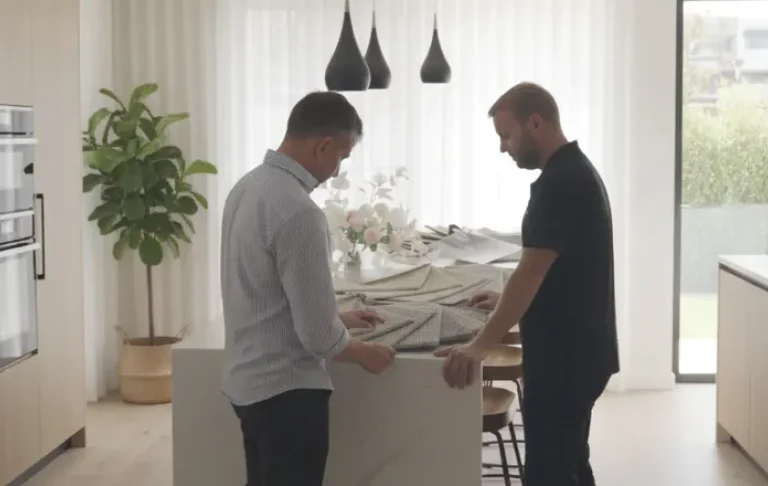
Drawbacks are easier to judge with the actual product in front of you. Our mobile showroom brings engineered timber samples to your home, so you can check wear layers, finishes and colours in your own light and ask the awkward questions in person. Book a free in-home measure and quote, and we will give you straight answers either way.
Frequently Asked Questions
- What is the biggest problem with engineered timber flooring? – Moisture is the one that causes real damage. Engineered timber is not waterproof, so standing water, leaks and wet areas are genuine risks to it. The most common self-inflicted problem is different: buying a thin wear layer on price and discovering the floor can never be sanded back.
- Does engineered timber flooring delaminate? – Quality product very rarely does. Delamination, where the wear layer separates from the core, is overwhelmingly a symptom of cheap manufacturing or prolonged water exposure. Buying an established range with proper bonding, and keeping water off the floor, makes it a non-issue for practical purposes.
- Can you fix scratches in engineered timber? – Usually, yes. Fine surface scratches can be treated with touch-up products matched to the finish, and matte or brushed boards hide them well in the first place. Deeper damage can be repaired locally or removed entirely at the next recoat or sand, wear layer permitting.
- How long does engineered timber flooring last? – With a reasonable wear layer and sensible care, decades. The finish takes the daily punishment and can be renewed with a recoat, and thicker wear layers allow full sands on top of that. Thin, budget boards have shorter horizons because they cannot be renewed the same way.
- Is engineered timber high maintenance? – No. Routine care is a soft sweep or vacuum and an occasional damp, well-wrung mop, never a wet wash. The real maintenance rules are about prevention: felt pads under furniture, mats at entries, spills wiped promptly and window furnishings where the sun hits hardest.
- Is laminate or hybrid better than engineered timber? – Better at some jobs, yes. Hybrid handles water better and laminate resists scratching well, and both cost less (our engineered timber cost guide shows the gap). Neither is real timber, neither can be refinished, and neither feels or ages like hardwood. If genuine timber matters to you, engineered boards remain the sensible way to own it.
- Is engineered timber flooring toxic? – The question usually comes from the adhesives that bond the layers together, which can contain formaldehyde. Boards from reputable suppliers are rated E0 or E1, the strictest emission classes available in Australia, meaning they release less formaldehyde than plenty of ordinary household furniture. We only stock compliant product, and the emissions rating is something you can ask about for any floor we quote.