By Team Beare. Updated August 2026.
Engineered timber gives you a genuine hardwood surface with the warmth, feel and resale appeal only real timber carries, while hybrid gives you a highly realistic timber look that shrugs off spills, pets and hard family use. Neither floor is better outright. Engineered timber wins on authenticity and the ability to be refinished, hybrid wins on water resistance and low-fuss durability, and the right answer usually comes down to which rooms you are flooring and how your household lives.
What Is The Real Difference?
Engineered timber is real wood. A hardwood wear layer sits on top of a stable plywood core, so the surface underfoot is genuine timber with natural grain and colour variation, and no two boards are the same. For a closer look at how those boards are built and the types available, our what is engineered timber flooring guide covers the construction in full.
Hybrid is a rigid vinyl-based floor. A printed timber image sits under a tough clear wear layer, over a dense stone-composite (SPC) or wood-composite core, usually with an acoustic underlay attached beneath. The look has become remarkably convincing, but it is a photograph of timber rather than timber itself. That single difference, real wood versus an image of wood, drives almost every trade-off that follows.
It also explains why the two floors fail differently. Timber’s weaknesses are natural ones, water and wear, and its strengths compound over time. Hybrid’s weaknesses are a service life that ends when the wear layer does, and its strengths are exactly where timber is cautious. If you are weighing the two hybrid core types, our SPC vs WPC guide covers that decision separately.
How Do They Handle Water And Spills?
This is the biggest practical difference, and it deserves honest framing rather than slogans:
- Engineered timber is not waterproof – it tolerates normal humidity better than solid timber, but standing water can swell the timber and damage the boards. Spills need wiping up promptly, and bathrooms and laundries are not its territory.
- Hybrid is waterproof from the top down – the boards themselves do not absorb water, so everyday spills, wet paws and dropped drink bottles are non-events. That protection works from above only; it does not stop moisture rising from a damp slab underneath, which still needs to be addressed before installation.
- Wet areas are a product-and-rules question – even with hybrid, suitability for bathrooms and laundries depends on the specific product, the installation system and the manufacturer’s requirements, not on the word waterproof alone.
If your household regularly tests its floors with water, hybrid removes a whole category of worry. If spills are occasional and wiped up, engineered timber copes fine in kitchens and living areas.
Which Looks And Feels More Authentic?
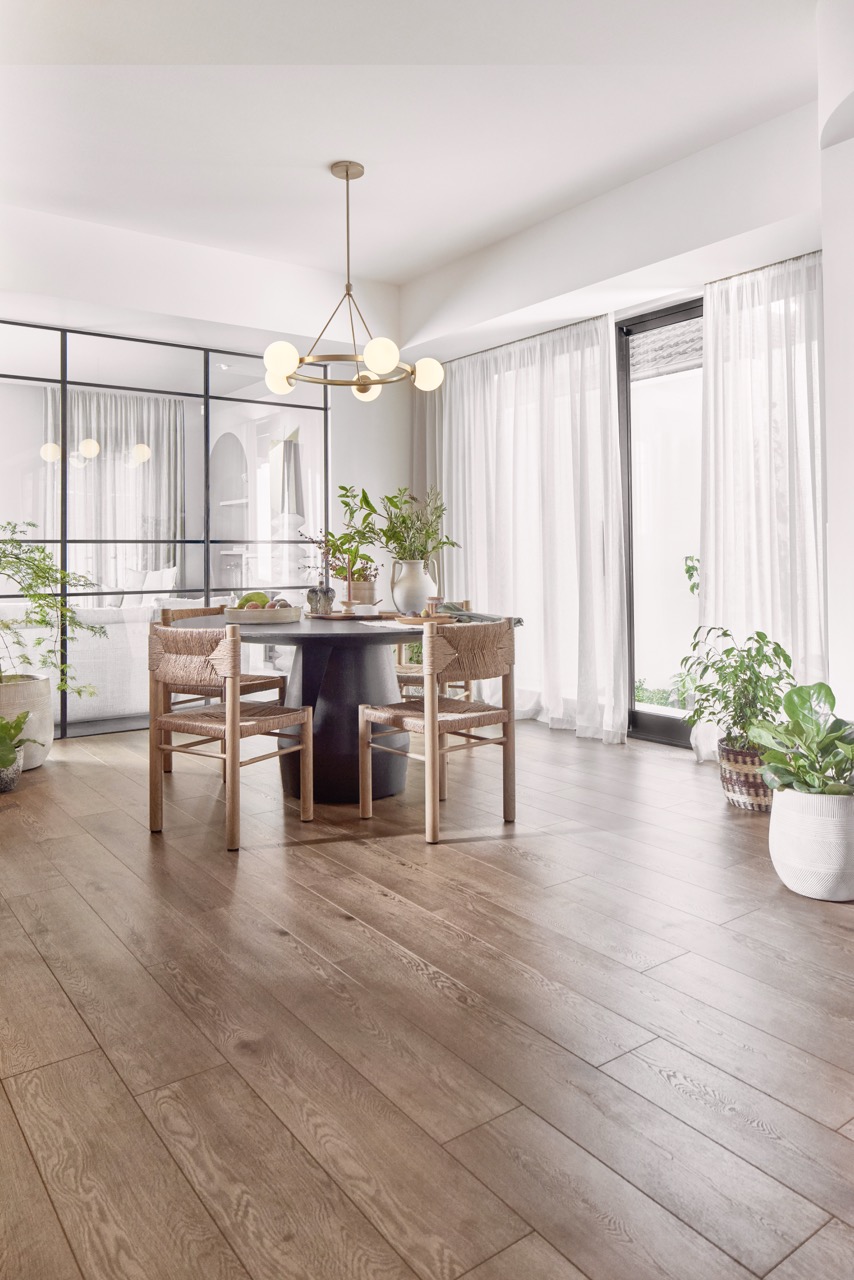
Engineered timber, without argument. Real timber has depth: grain you can feel, natural variation from board to board, and a warmth underfoot that vinyl construction does not replicate. It also ages like timber, developing character rather than simply wearing. Our timber flooring range shows that depth across species and finishes.
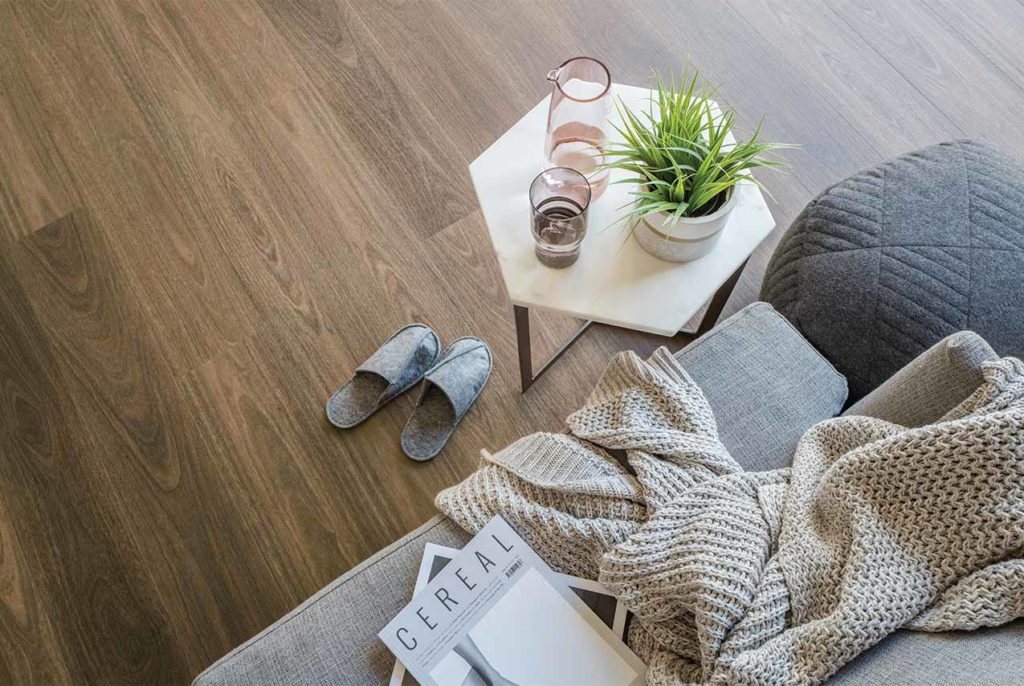
Quality hybrid has closed the visual gap impressively, with textured surfaces and varied plank prints, and from a standing height many people cannot pick it. The difference shows up close, underfoot and over time. Print patterns can repeat across a large open room, and a damaged hybrid board is replaced rather than repaired. How much this matters is personal. Some owners never think about it again; others notice every day.
Which Suits Pets And Busy Families?
Hybrid is the lower-stress choice for chaotic households. Its wear layer resists claw scratches and general scuffing well, water bowls and accidents do not threaten it, and cleaning is simple. For big dogs, toddlers and high-traffic hallways, that resilience is genuinely valuable.
Engineered timber handles family life too, but on timber’s terms. Harder species resist denting better than softer ones, matte and brushed finishes hide fine scratches well, and felt pads under furniture are worth the five minutes they take. Timber will collect small marks over the years. Many owners consider that character; if you would consider it damage, lean hybrid in the busiest zones.
Can You Refinish Them?
Here the advantage flips. Engineered timber with a decent wear layer can be sanded or recoated when the surface eventually tires, renewing the floor without replacing it. That is a long-term economy no vinyl-based product offers.
Hybrid cannot be refinished. When the wear layer is done, the floor is done, and the answer is replacement. Quality hybrid lasts well, so this is a distant event for most homes, but it changes the long-term maths: engineered timber is one floor renewed over decades, hybrid is a floor with a finite service life. Our hybrid vs laminate comparison looks at how hybrid’s lifespan stacks up against its closest lookalike rival.
What About Acoustics And Comfort?
Both floors are hard surfaces, but they sound different. Hybrid usually ships with an attached acoustic underlay and its dense core keeps footfall relatively quiet, which body corporates in apartment buildings tend to appreciate. Engineered timber glued direct to a slab feels reassuringly solid and quiet underfoot; floated over underlay it can sound slightly hollow if the preparation is rushed, so installation quality matters.
Underfoot temperature is similar, and both are compatible with typical Australian living. Soft furnishings and window furnishings do more for a room’s acoustics than the choice between these two floors.
Which Is Easier To Live With Day To Day?
Hybrid asks less of you. Routine care is a sweep or vacuum and a damp mop, with no anxiety about how damp is too damp. There is no finish to recoat on a schedule, no species hardness to think about, and a scratched or damaged board can be clicked out and replaced if spares were kept from the installation.
Engineered timber is not demanding, but it does have house rules. Mops stay well wrung, steam mops stay in the cupboard, felt pads live under the furniture, and the finish will eventually want a recoat to stay at its brightest. In exchange you get a surface that improves with age instead of merely surviving it. Households that follow the rules barely notice them; households that will not are usually happier with hybrid, and there is no shame in knowing which one yours is.
Which Adds More At Resale?
Real timber carries a perception advantage. Listings say “timber floors” with confidence, buyers respond to genuine hardwood, and a well-kept engineered floor reads as a lasting feature of the home. Hybrid presents beautifully too, and a fresh hybrid floor beats tired carpet in any inspection, but it is understood as a practical finish rather than a selling feature in itself. If resale perception matters to your decision, engineered timber has the edge; if the buyers in your market value low maintenance, the gap narrows.
Which Rooms Suit Each Floor?
- Living and dining areas – both excel. Choose on feel, look and budget priorities.
- Kitchens – both work; hybrid offers extra insurance against dishwasher and sink mishaps, engineered timber is fine with prompt wiping.
- Bedrooms and hallways – both excel; engineered timber’s warmth is lovely in bedrooms, hybrid’s toughness suits hallways.
- Laundries and bathrooms – hybrid only, and only where the specific product and installation system are approved for it. Engineered timber does not belong in wet areas.
- Apartments – both can comply with acoustic rules; hybrid’s attached underlay simplifies approval, engineered timber direct-stuck performs beautifully.
- Slab-on-ground homes – both suit slabs when moisture testing and preparation are done properly.
How Do You Decide?
Strip it back to three questions. First, will the floor run into wet or water-prone rooms? If yes, hybrid, or a two-floor plan that keeps timber to the dry zones. Second, does owning real timber matter to you? If the answer is an instinctive yes, engineered timber is the floor you will still be glad about in fifteen years, and our engineered timber range covers the species and wide-board looks that make it worthwhile. Third, what does daily life look like? Big dogs, ball sports in the hallway and a household allergic to maintenance all point to our hybrid flooring range, and our hybrid flooring cost guide explains what drives the numbers, and our engineered timber cost guide does the same for timber.
Plenty of homes sensibly use both: engineered timber through the living spine of the house, hybrid in the laundry, entry and rumpus. The two are close enough in colour ranges that the transition can be handled gracefully at the openings between rooms.
Installation methods and wet-area requirements vary by state and territory. Always follow the manufacturer’s installation instructions, and confirm requirements with your local authority or certifier, such as the QBCC in Queensland.
Compare Both Floors In Your Own Home
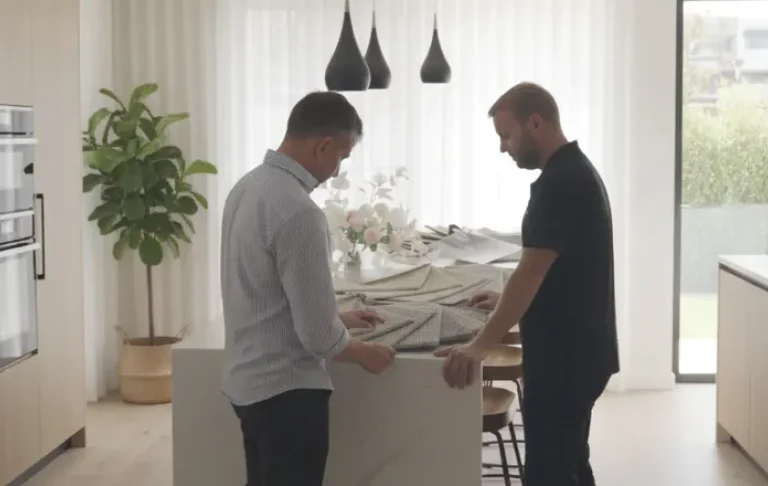
The honest way to settle this is side by side, in your light, in your rooms. Our mobile showroom brings engineered timber and hybrid samples to you, so you can feel the difference rather than guess at it. Book a free in-home measure and quote and we will talk through your rooms one by one, with no pressure either way.
Frequently Asked Questions
Is hybrid flooring as good as engineered timber?
They are good at different things. Hybrid is more resistant to water and daily wear and needs less care, while engineered timber is genuine hardwood that feels warmer, reads better at resale and can be refinished rather than replaced. Match the floor to the room and the household rather than ranking them.
Can you tell hybrid flooring apart from real timber?
From a distance, often not; quality hybrid prints and textures are very convincing. Up close and underfoot the differences appear: hybrid repeats its patterns, feels slightly different and lacks timber’s natural board-to-board variation. Guests rarely notice; owners sometimes do.
Which is better for dogs, hybrid or engineered timber?
Hybrid, in most cases. Its wear layer handles claws and water bowls without complaint. Engineered timber copes well when you choose a harder species and a matte or brushed finish, and keep claws trimmed, but it will collect more visible marks over time than hybrid will.
Can engineered timber go in a bathroom or laundry?
No. Engineered timber is not waterproof and wet areas are beyond its limits. Hybrid can be suitable for laundries and some bathrooms, but only where the specific product and installation system are approved for wet areas and installed to the manufacturer’s requirements.
Does hybrid flooring last as long as engineered timber?
Generally no, because it cannot be renewed. A quality hybrid floor gives many years of service and then gets replaced. Engineered timber with a reasonable wear layer can be recoated or sanded when it tires, so one floor can span decades. Hybrid trades ultimate longevity for day-to-day resilience.
Which is easier to install?
Hybrid is the simpler installation, clicking together over an underlay with minimal fuss, which also makes future board replacement straightforward. Engineered timber can be floated or glued directly to the slab; direct-stick takes more preparation but delivers the most solid, quiet result underfoot.